Protecting Workers, Jakarta Government Signs JSHK Work Program
Reported by Aldi Geri Lumban Tobing | Translated by Nugroho Adibrata
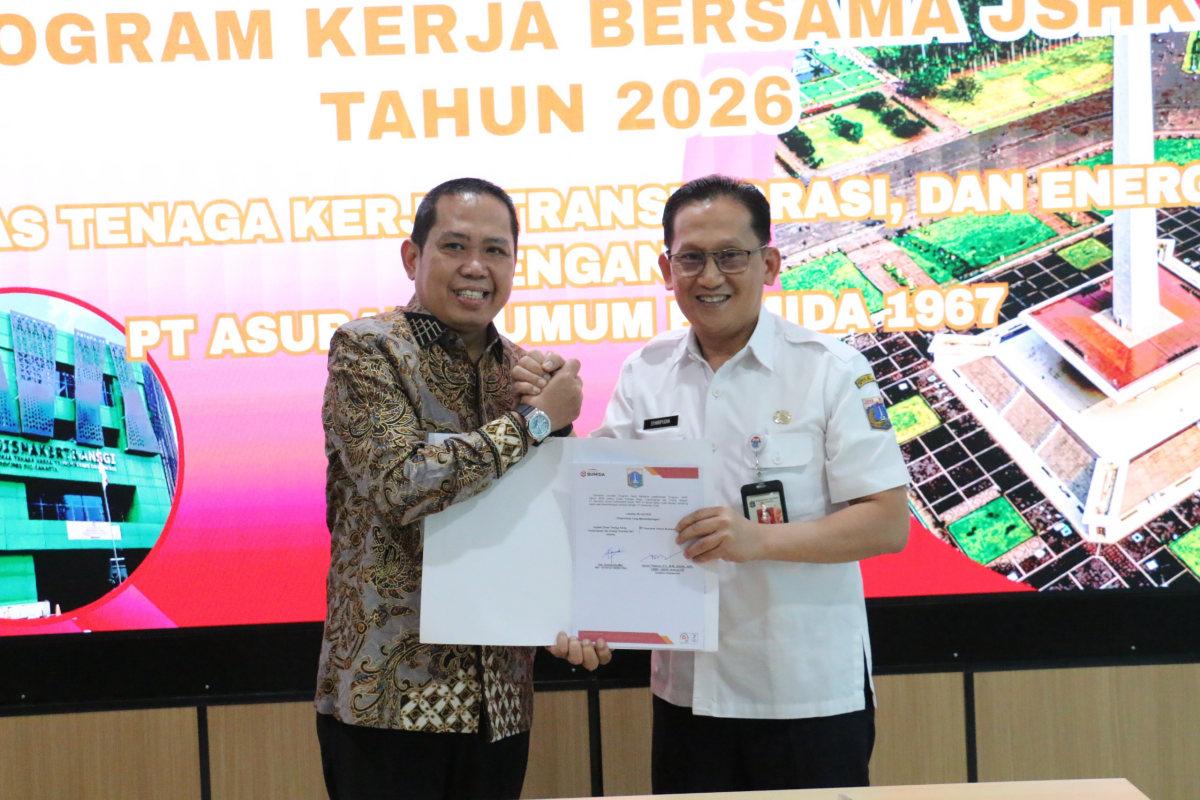
The Jakarta Manpower, Transmigration, and Energy Agency (Disnakertransgi), in collaboration with PT Asuransi Umum Bumida 1967, has signed the Work Program for Social Security 2026 in Employment Relations Outside Working Hours (JSHK).
These figures prove that the JSHK program is a double-edged success
This signing serves as a shared commitment to bolster protection for workers in Jakarta while simultaneously enhancing the quality of the program's implementation on a sustainable basis.
Held in conjunction with the signing, JSHK claims were ceremonially presented to beneficiaries from PT Saipem Indonesia and BPJS Ketenagakerjaan.
Kramat Jati Market Traders Guaranteed Insurance CoverageThe handover stands as a testament to the JSHK program’s commitment to safeguarding workers and their kin against the risk of unforeseen accidents or fatalities occurring beyond work hours.
Jakarta Manpower, Transmigration, and Energy Agency Head, Syaripudin, described the JSHK program as a key component in building a robust labor protection framework.
He furthered that under the mandate of Gubernatorial Regulation No. 136/2009, it is compulsory for all Jakarta-based employers to register their workforce in the JSHK scheme.
"This program bolsters the existing benefits from BPJS Ketenagakerjaan, providing workers with 24-hour coverage whether they are at work or outside of working hours," he added, during the event in Gambir, Central Jakarta.
Besides safeguarding the workforce, the JSHK program serves as a revenue driver for the city. Syaripudin mentioned, 25 percent of the program’s target income contributes to Jakarta’s Miscellaneous Local Own-Source Revenue (LLPAD).
The program’s performance in 2025 surpassed expectations, with actual revenue hitting Rp 15.39 billion—representing 102.61 percent of the initial Rp 15 billion goal.
He attributed this milestone to the seamless collaboration between the Jakarta government, PT Asuransi Umum Bumida 1967, the private sector, and laborers to broaden JSHK coverage.
"These figures prove that the JSHK program is a double-edged success; it delivers essential protection while simultaneously fueling the region's fiscal health," he remarked.
He noted that JSHK has evolved into a vital, adaptive protection instrument that mirrors the shifting labor landscape, characterized by high mobility and modern work models.
The synergy between the Jakarta government and PT Asuransi Umum Bumida 1967 goes the extra mile by covering more than just the existing workforce.
This partnership also grants accident and life insurance to vocational trainees at various Regional Job Training Centers (PPKD).
Because the coverage is active 24/7, these trainees can focus on their studies, practical workshops, and field activities without worry.
"We hope this initiative will bolster the competencies of job seekers while ensuring the training climate remains secure and productive," Syaripudin added.
Syaripudin looks forward to reinforcing the existing cooperation by driving innovation and elevating the quality of the JSHK program’s delivery.
"By inking this JSHK 2026, the Jakarta government is doubling down on its commitment to broaden the safety net for our workforce. We aim to foster deeper synergy with all stakeholders and introduce labor policies that deliver real-world value for workers, industry players, and the city's progress," he concluded.