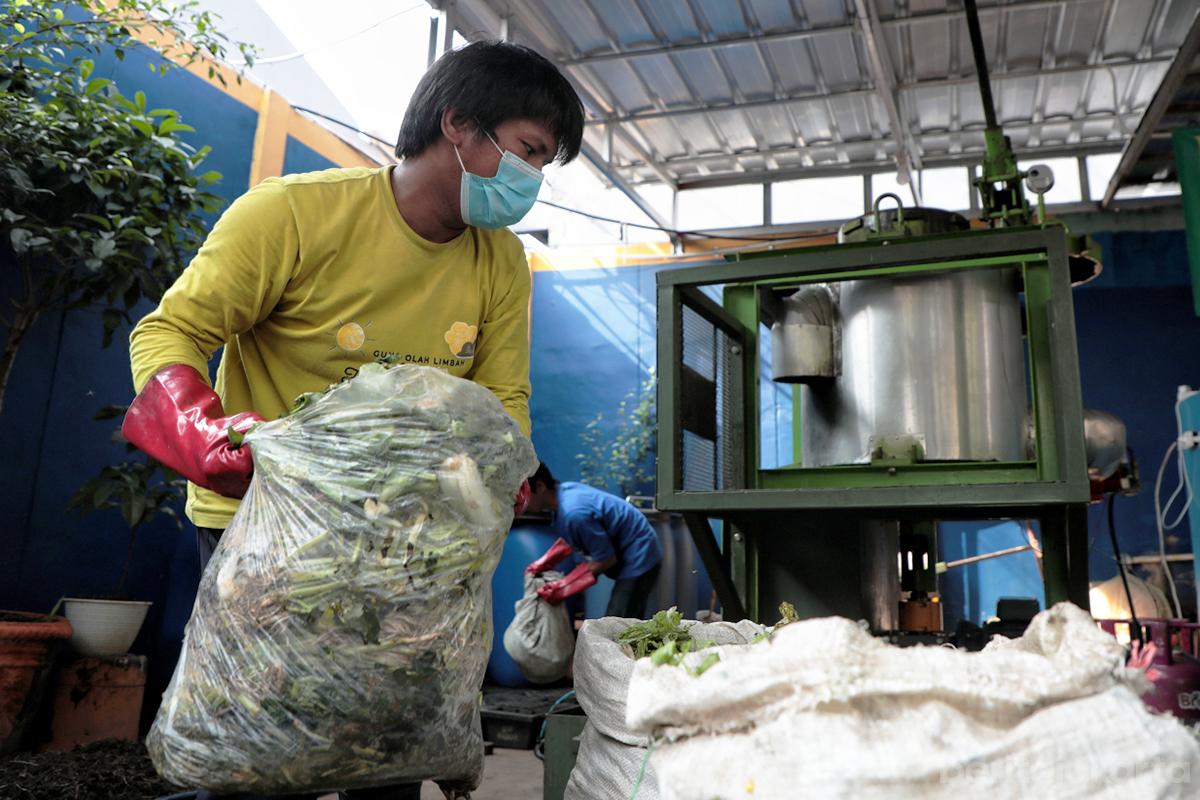

Jakarta Steps Up Food Waste Prevention
Reported by Aldi Geri Lumban Tobing | Translated by Rizky Mawardi
The Jakarta Provincial Government is strengthening food waste prevention through policies, behavioral changes, and business innovation. These steps are aimed at reducing the amount of food waste entering the waste system while also reducing the burden on urban waste management.
Prevent valuable food from ending up as waste
Head of Jakarta Environmental Agency, Dudi Gardesi Asikin said food waste is not only a problem of food waste, but also adds to the burden of collecting, transporting, and processing waste that must be handled every day.
Environmental Agency Has Served 1,700 Bulky Waste Requests"Reducing food waste from households, restaurants, hotels, catering services, and various businesses will significantly reduce the burden on city waste management. This effort must be implemented from the source to prevent valuable food from ending up as waste," he said.
According to him, preventing food waste requires a comprehensive approach, from shopping planning and food storage to processing and serving, to reusing food that is still edible. Therefore, these efforts also support the reduction of organic waste, which dominates Jakarta's waste.
He explained that currently, Jakarta produces around 9,059 tons of waste every day and almost half of it is organic waste, dominated by food scraps.
"Collaboration between the government, the community, and the private sector is an important step so that reducing food waste is not only an environmental movement, but also part of a business efficiency strategy, strengthening food security, and reducing the burden of Jakarta's waste management," he explained.
Head of Jakarta Food Security, Maritime and Agriculture Agency, Hasudungan A. Sidabalok stated food is the result of a long process involving farmers, producers, distributors, traders, and consumers. Therefore, every food ingredient must be used responsibly and not easily end up as waste.
He also explained Bappenas data shows that every year around 23 million to 48 million tons of food are lost in the supply chain or wasted at the distribution and consumption stages.
"This condition has the potential to cause economic losses of up to Rp 511 trillion," he explained.
To address this challenge, the Jakarta Provincial Government is currently drafting a Regional Regulation on Food System Management. One of the regulations will address the prevention and control of food waste.
"Successfully building a sustainable food system requires the participation of all stakeholders. Every effort to reduce food waste will have a significant impact on food security and help reduce waste in Jakarta," he added.
Indah Budiani, Executive Director of the Indonesian Business Council for Sustainable Development, stated that reducing food waste also needs to be a priority for businesses, particularly in the hotel, restaurant, and catering sectors.
"Every food item that is wasted not only adds to the environmental burden, but also means lost costs for purchasing, storage, labor, processing, and waste management," she stated.