PPPA Ministry, International Partners Study Jakarta’s Survivor Protection Services
Reported by Aldi Geri Lumban Tobing | Translated by Nugroho Adibrata
The Jakarta government’s commitment to providing survivor-centered protection services for women and children has once again earned high praise.
This visit provides a platform to learn from one another
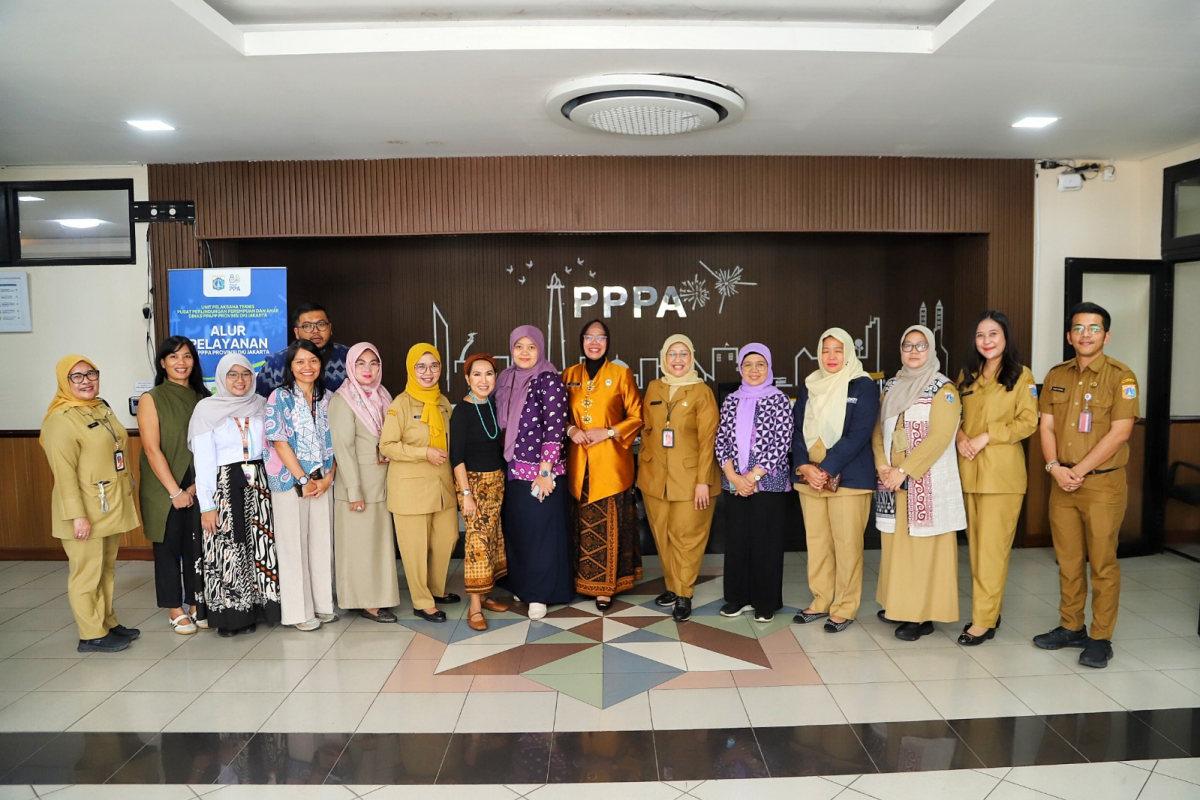
The Jakarta Empowerment, Child Protection, and Population Control Agency (PPAPP), through the Women and Children Protection Center (PPPA), hosted a visit from Ministry of Women’s Empowerment and Child Protection (KemenPPPA), United Nations Population Fund (UNFPA), and various development partners. The visit aimed to benchmark best practices in delivering protection services for women and children who have survived violence.
This visit functioned as a forum to exchange expertise on institutional management, service protocols, and the inter-agency coordination essential for the holistic assistance of survivors.
Jakarta Becomes a Role Model for Integrated Protection Services for Women and ChildrenThe gathering was attended by a distinguished delegation, including the Deputy for Women’s Rights Protection from KemenPPPA, high-ranking officials from Jakarta PPAPP Agency and PPPA Unit, and representatives from UNFPA. Also present were delegates from Embassies of Canada and Australia, European Union, BAZNAS, and Jakarta agencies for Education, Health, and Social.
Women’s Rights Protection Deputy Minister, Desy Andriani, lauded the Jakarta PPPA’s service model, noting that the city’s expertise could inspire other provinces to fortify their protection frameworks.
"This visit provides a platform to learn from one another. It is our hope that Jakarta’s proven strategies will not only refine coordination and service standards but also serve as a gold standard for other regions in safeguarding survivors of violence," she remarked, Thursday (7/30).
Echoing this sentiment, UNFPA Indonesia Representative Hassan Mohtashami highlighted that Jakarta’s dedication proves that survivor-centered care is best achieved through long-term partnerships.
"Synergy between state authorities and development partners is key to creating an inclusive system that is both resilient and responsive to the public’s needs," he added.
Jakarta's PPPA Unit Head, Rahayu Sri Rahmawati provided a comprehensive breakdown of the city's service continuum for survivors. She outlined every step, from the moment a complaint is received to initial assessments, legal and psychological aid, medical services, outreach, shelter placement, and eventual social reintegration.
The session also highlighted the referral protocols and inter-agency coordination that guarantee holistic support for all survivors.
Beyond the briefings, the delegation conducted an on-site inspection of Jakarta’s PPPA facilities. This tour offered tangible insights into real-world case handling, the strategic use of support infrastructure, and the collaborative efforts between agencies in protecting women and children from abuse.
Jakarta PPAPP Agency Head, Dwi Oktavia, stated that the protection of women and children can only be achieved through robust inter-agency cooperation.
According to her, protection services must be holistic, easily accessible, professional, and genuinely survivor-centered.
"Hence, cross-sector collaboration is a vital foundation to ensure that every woman and child in need of protection can receive swift, precise, and comprehensive care," she explained.
She hoped that the best practices established by Jakarta PPPA would serve as a benchmark for enhancing capacity and standardizing women and children’s protection services across various regions in Indonesia.
"Jakarta PPAPP also reaffirms its commitment to continuously broadening collaboration with the central government, regional authorities, international agencies, and development partners to ensure the delivery of high-quality and sustainable protection services," she emphasized.