Here's How North Jakarta is Outsmarting Dry Season to Save the Harvest
Reported by Anita Karyati | Translated by Nugroho Adibrata
The North Jakarta Maritime, Agriculture, and Food Security Sub-agency (KPKP) is taking proactive measures to minimize the impact of the dry season, which is expected to last until September.
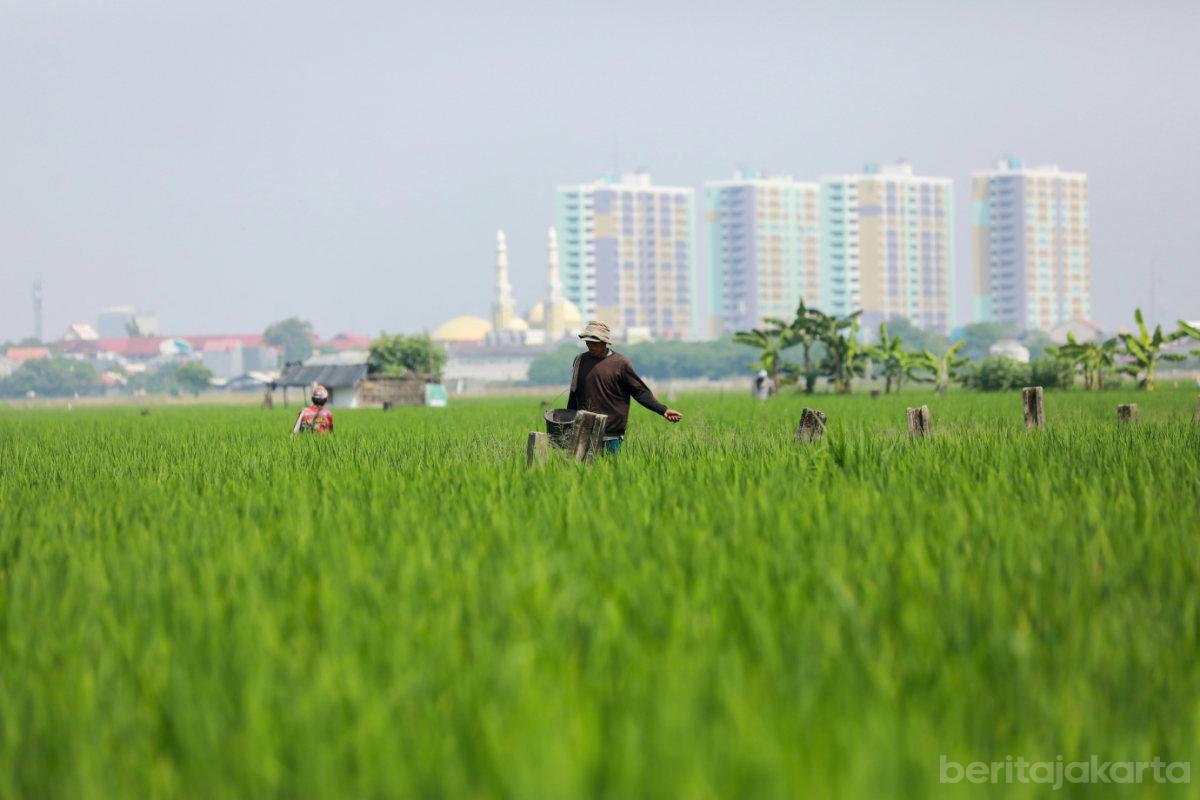
Rice requires significant water during its early planting stages
North Jakarta KPKP Sub-agency Head, Novy Christine Palit stated that her team is providing intensive guidance to help local farmers and fishers adapt to extreme weather.
"We have urged farmers to strategically manage the water shortage by switching to drought-resistant crops, such as cassava, corn, and legumes," she expressed, Monday (8/3).
Jakarta Prepares to Mitigate Prolonged Dry Season ImpactShe pointed out that secondary crops (palawija) are far better suited for the dry season than water-intensive plants.
Meanwhile, rice fields in Rorotan area remain in the clear, as the harvest is expected to begin within the next two weeks.
"Rice requires significant water during its early planting stages. However, since the crops in Rorotan are nearing harvest, the dry weather is actually beneficial for the process. We will resume replanting once the rainy season returns," she explained.
Beyond the dry weather, a spike in pest infestations also poses a significant threat during the dry season. Proper control measures are being intensified to combat mealybugs on fruit crops, as well as bird and rodent threats in rice fields.
"While traditional vegetable farming is heavily impacted by the heat, we are promoting hydroponics as a smart alternative. This system allows for precise management of water and nutrients, ensuring plants thrive even when resources are scarce.
"Vegetable cultivation might be challenged right now, but hydroponics offers a resilient path forward. It’s all about precision—delivering exactly the water and nutrients the plants need," she explained.
Novy added the dry season has caused water levels to drop significantly, particularly in the Marunda Kepu area, leaving numerous fishing boats stranded. Consequently, fishermen are forced to manually haul their vessels to deeper waters before they can head out to sea.
"We're coordinating with the Water Resources Sub-agency to initiate dredging in the area. Our aim is to clear the path and ensure that fishing activities can return to normal as soon as possible," she added.
Despite the challenges, she mentioned a silver lining for fishers: the catch for blue swimmer crabs using traps (bubu) remains steady.
Kebun Guyub Sundiro Farmer Group Head, Candra Putra Jaya, reported that the extreme weather has caused crops to wither faster, leading to a 20–30% drop in yield.
"The soil is quite dry, requiring us to water the plants twice daily—morning and evening. Fortunately, our infiltration wells have been a lifesaver, providing a sufficient water supply to keep the crops alive," he shared.
He hoped for further government support, specifically the provision of shade nets (paranet) to shield crops from the sun and an increase in infiltration wells within urban farming zones.
"We've also received ongoing guidance on managing the pests and diseases that typically spike during the dry season, ensuring that our harvest quality remains uncompromised," he concluded.