East Jakarta Gulkarmat Sprays Bantargebang Landfill to Prevent Fires
Reported by Nurito | Translated by Maria Inggita
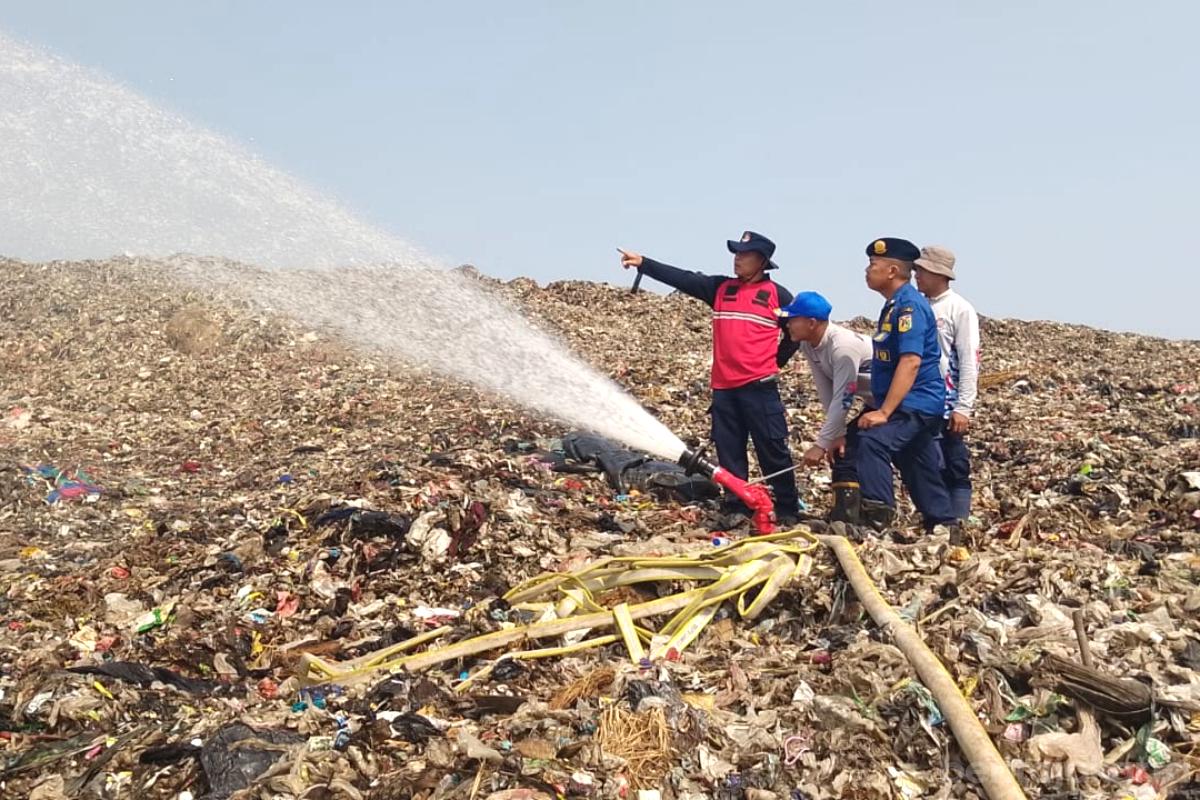
To prevent potential fires during the dry season, the East Jakarta Fire and Rescue (Gulkarmat) Sub-agency has been regularly spraying water on piles of waste at the Bantargebang Integrated Waste Management Facility (TPST) in Bekasi, West Java.
The waste piles contain flammable methane gas
The spraying began on July 10, 2026, and is still ongoing. No end date has been set as weather conditions remain a concern.
Modernizing Bantargebang, Jakarta Aims to Eliminate Open Dumping by 2029East Jakarta Fire and Rescue Sub-agency Head Muchtar Zakaria said the spraying is a preventive measure to reduce the risk of fires in areas with accumulated waste, particularly during the dry season.
He noted the measure follows instructions from the Fire and Rescue Agency Head and Jakarta Governor, as well as a request from the Jakarta Environment Agency.
"The spraying is focused on Zones 2 and 3. We do not yet know when it will end because the dry season is still ongoing. We are taking preventive measures to reduce the risk of fires, as the waste piles contain flammable methane gas," he said on Tuesday (8/11).
Muchtar explained that two fire trucks, each carrying 10,000 liters of water, are deployed every day to support the operation.
"A total of 16 personnel are also deployed every day to carry out the spraying and help prevent potential fires at the site," he added.
According to him, personnel take turns staying overnight at the Bantargebang facility, allowing them to continue monitoring and cooling the area around the clock.
"In addition to the two fire trucks, two heavy equipment units are deployed to break up the piles of dry waste. This makes it easier for water from the firefighting equipment to reach deeper into the waste piles," he explained.
Muchtar said there have been no significant obstacles during the spraying operation so far. However, smoke has still been detected at several points in the area, which is believed to come from methane gas trapped inside the waste piles.
The situation remains a concern because the waste piles at the Bantargebang facility have accumulated over decades, resulting in high levels of methane gas.
"The waste piles have been there for years, so the methane levels are high. We are optimizing our preventive efforts," he emphasized.