Jakarta Deploys Weather Modification to Slash Air Pollution by Up to 23%
Reported by Tiyo Surya Sakti | Translated by Nugroho Adibrata
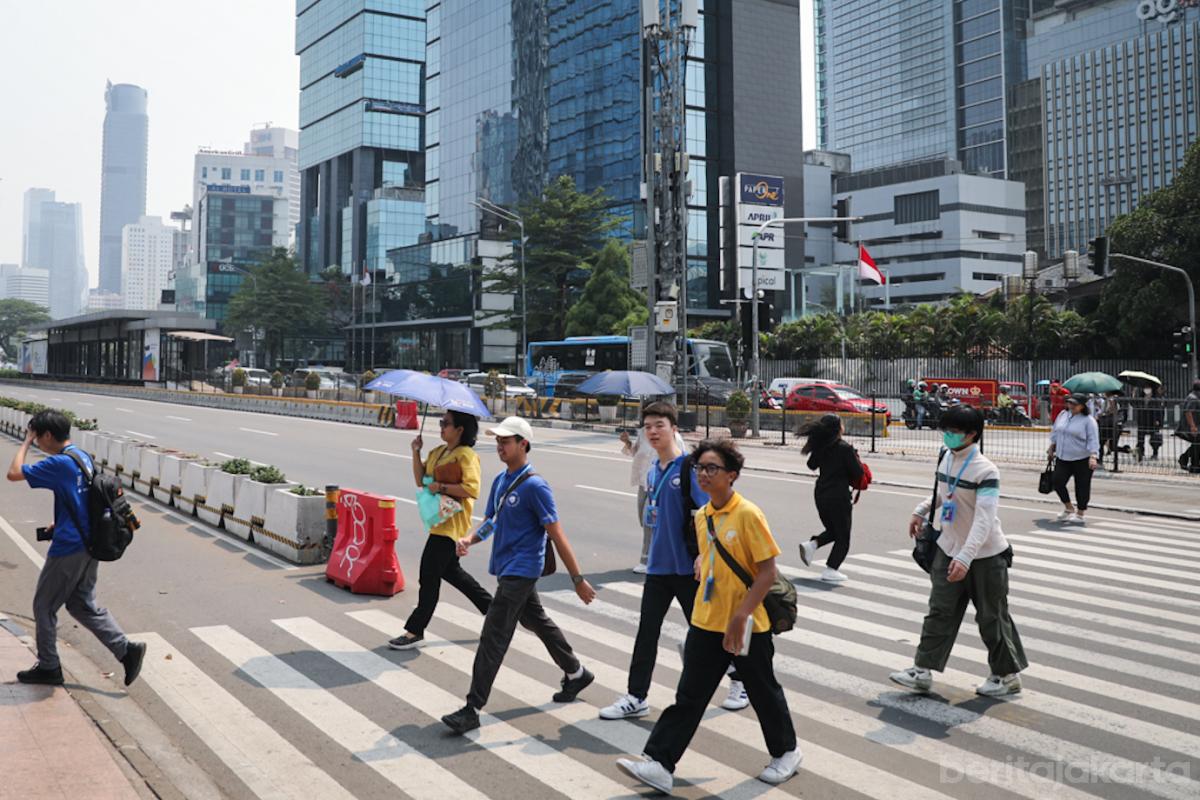
In a bid to mitigate deteriorating air quality, the Jakarta government has initiated a Weather Modification Operation (OMC) targeting dust particles. The method involves the atmospheric dispersal of a Sodium Lauryl Sulfate (SLS) and water mixture, which acts as a binding agent to effectively reduce the concentration of pollutants in the air.
Our team has deployed one aircraft to conduct two sorties daily
Smart Aviation Flight Scientist, Elma, noted that this method marks a significant departure from traditional weather modification. While conventional OMC typically relies on seeding salt into potential rain clouds, that approach is currently unfeasible.
"This specific method was chosen because the potential for rain cloud formation is extremely low, a direct result of El Niño and the ongoing dry season," she explained, Friday (8/28).
Jakarta Braces for El Niño with Weekly Weather Modification OperationsShe explained that the SLS-water solution acts as a binding agent for airborne pollutants. This method is expected to drive a significant reduction in PM2.5 concentrations across Jakarta.
According to her, analysis shows that the technique is remarkably effective, with the potential to slash air pollution levels by up to 23 percent.
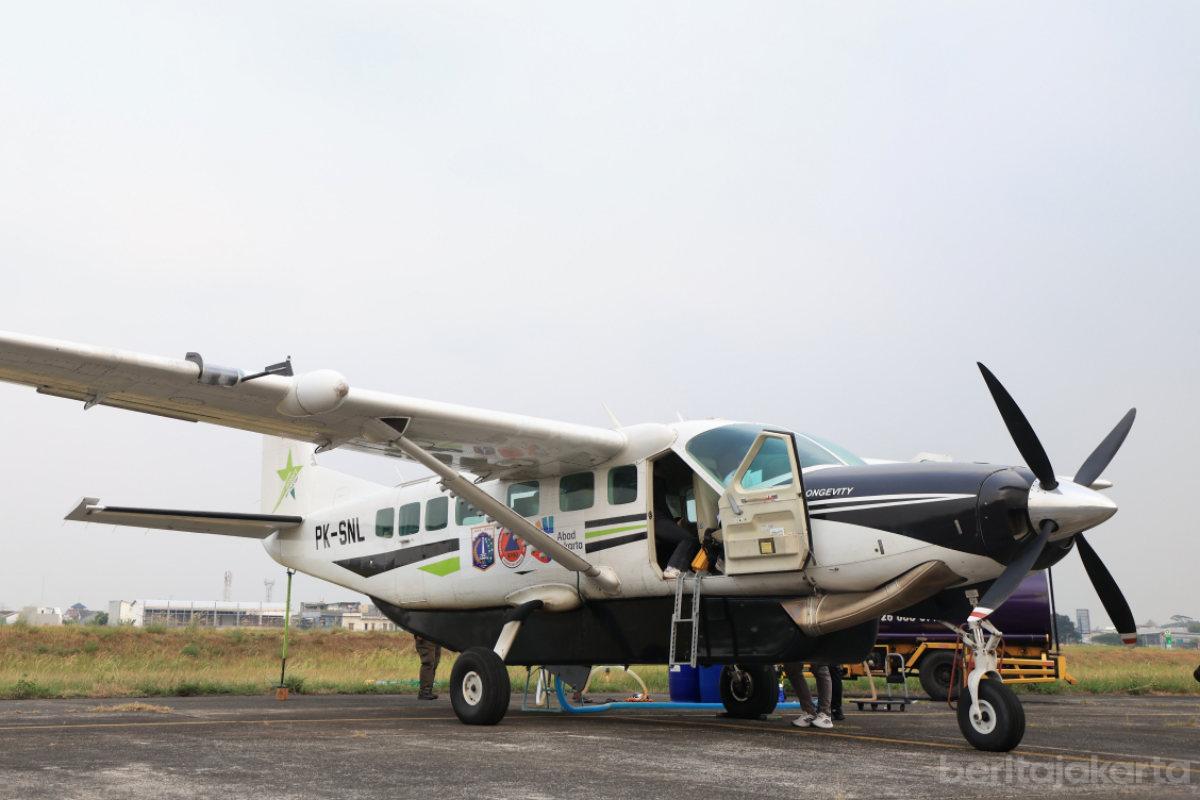
"To maximize the impact amidst high pollutant activity, our team has deployed one aircraft to conduct two sorties daily," she explained.
Following guidelines from the Meteorology, Climatology, and Geophysics Agency (BMKG), the spraying operations are being prioritized over southern East Jakarta.
"In today's initial sortie, we covered the Taman Mini and Cibubur vicinities. The second flight is scheduled to maintain that same trajectory to maximize the application's impact," Elma added.
She added that the spraying process utilizes specialized equipment mounted on the aircraft’s wings, with the flow rate precisely regulated via control valves inside the cabin. Each flight is capable of carrying a maximum payload of 1,000 liters of the SLS solution.
"We hope that through these dedicated efforts, the air pollution crisis in Jakarta can be addressed in the near future," she concluded.