Syafrin Invites South Jakarta Fatayat NU South to Contribute to Realizing Inclusive Development
Reported by Tiyo Surya Sakti | Translated by Rizky Mawardi
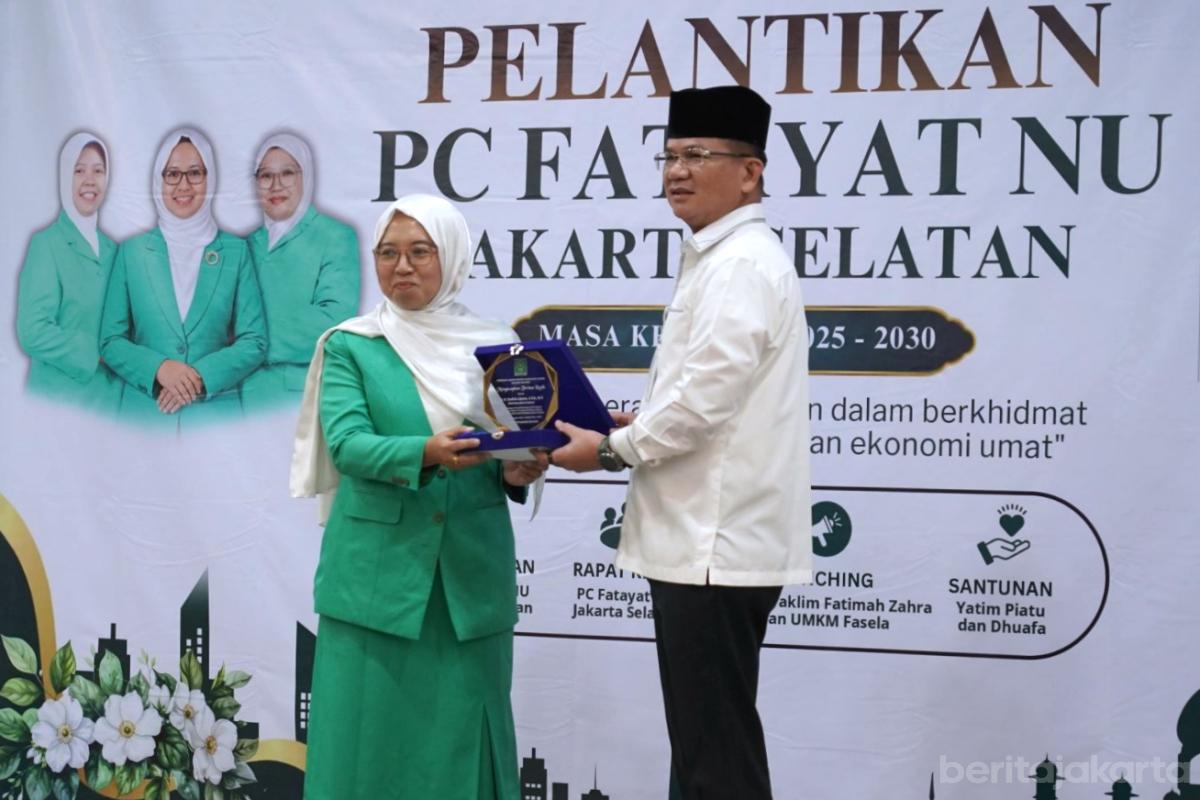
South Jakarta, Mayor Syafrin Liputo invited the Nahdlatul Ulama (NU) South Jakarta chapter for the 2025-2030 term to play a role in realizing inclusive and sustainable development.
Empowering women and the younger generation
Syafrin stated that the inauguration of the South Jakarta Fatayat NU leadership was not merely a ceremonial change of leadership. This momentum served as a starting point for strengthening social responsibility in addressing increasingly complex urban dynamics.
City Council Speaker Suhud Prioritizes Inclusive Education for the Disabled"Fatayat NU has a very strategic position in community development, especially in empowering women and the younger generation," he said, Friday (9/25).
Syafrin explained that women not only play an important role within the family but are also the driving force behind development in various fields, from social, educational, economic, and health sectors to community life.
"I also encourage Fatayat NU cadres to actively participate in various community programs, such as strengthening family resilience, children's and youth education, women's economic empowerment, and increasing digital literacy," he added.
He continued that cross-sector collaboration with community organizations, religious organizations, community leaders, the world of education, and the business world is a must.
Meanwhile, the Chairperson of the South Jakarta Fatayat NU Branch Leadership (PC) for the 2025-2030 term, Siti Istianah, explained that Fatayat NU officially launched two strategic programs, namely the Fatimah Zahra Taklim Assembly and the Fasela MSME.
The launch of these two programs is a concrete step by the organization to strengthen religious guidance and economic empowerment of the community in the South Jakarta area.
Siti added that the strategic program's presence is based on a strong spirit of collaboration. She believes that cooperation between the government, religious leaders, organizations, and communities can produce programs that not only work but also have a broad impact on society.
"We believe that when the government, religious scholars, organizations, and communities work together, they will provide programs that not only work, but will also have an impact on the wider community," she stated.