Fire Mitigation Demanded to Enhance Preventive Measures
Reported by Fakhrizal Fakhri | Translated by Nugroho Adibrata
Putting out fires fast is no longer enough—Jakarta must stop them before they even start.
The government must use data to identify peak risks
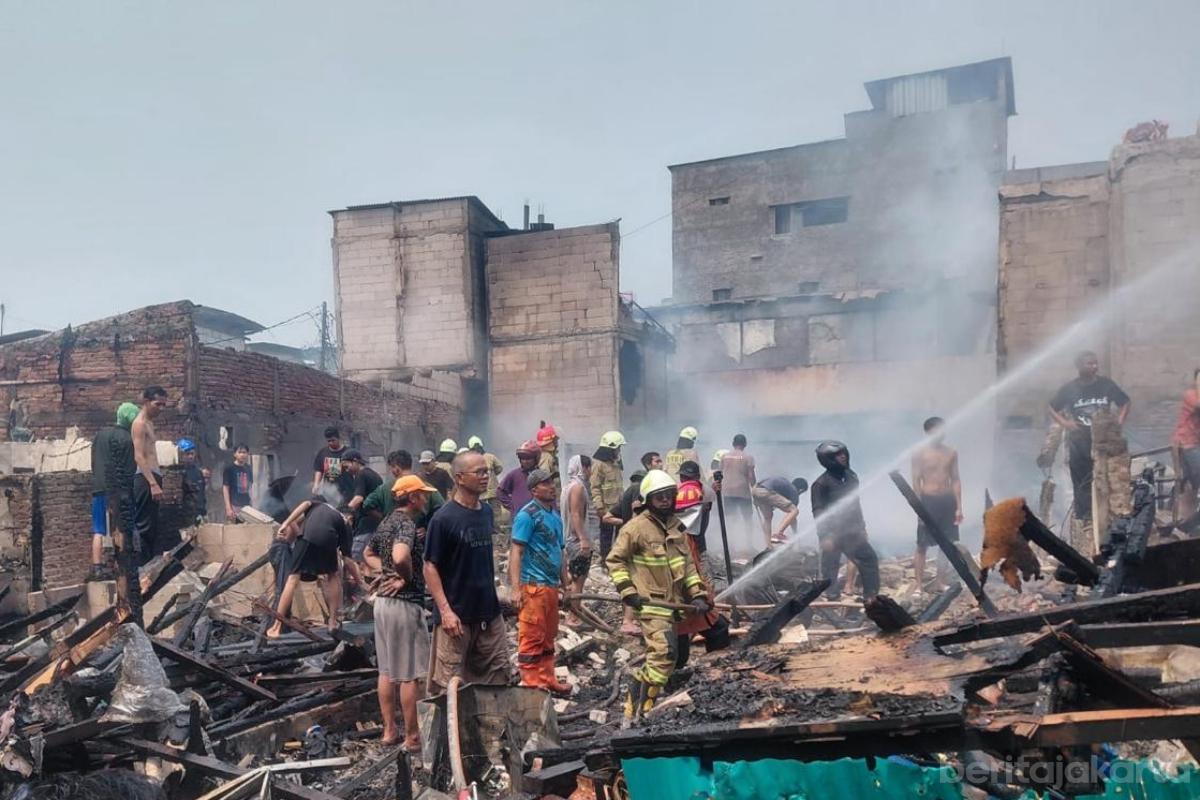
That was the wake-up call sounded by Legislative Council Commission A Member, Kevin Wu following a devastating blaze that tore through Kampung Muka, North Jakarta on Sunday (9/27). The inferno flattened 20 semi-permanent homes across an 1,800-square-meter area, upending the lives of 110 families—roughly 380 residents.
Urging authorities to move beyond reactive firefighting, Wu stressed that the capital urgently needs a risk-based prevention plan to protect its most vulnerable communities.
Fire Engulfs 20 Semi-Permanent Houses in Kampung Muka AncolKevin praised the Jakarta Fire and Rescue Agency for deploying 19 fire trucks and 95 personnel to stop the fire from spreading. Initial reports indicate a short circuit in a rented house caused the fire.
“Our firefighters worked hard during the fire. The government's challenge is to act before fires start. Every major fire must lead to systemic improvement," he expressed, Tuesday (9/29).
He noted the Fire and Rescue Agency's data recording 1,216 fires between January 1 and August 31, 2026. Electrical issues accounted for 649 cases (53.37%). Residential buildings suffered the most with 358 fires, and West Jakarta recorded the highest total at 368 cases (30.26%).
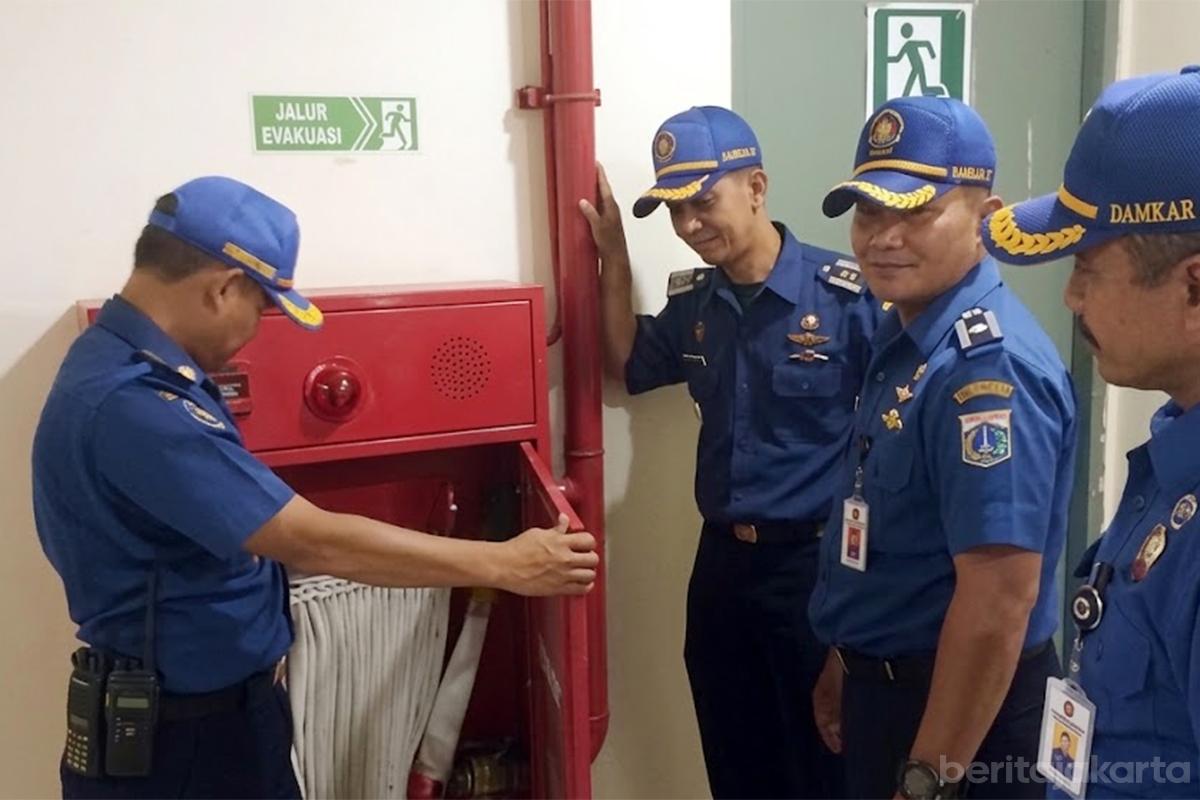
Hence, he urged the Jakarta government, Fire and Rescue Agency, local officials, PLN, and related agencies to create a Jakarta Fire Risk Map down to the RW level, covering fire history, building density, electrical conditions, fire truck access, hydrant availability, and environment.
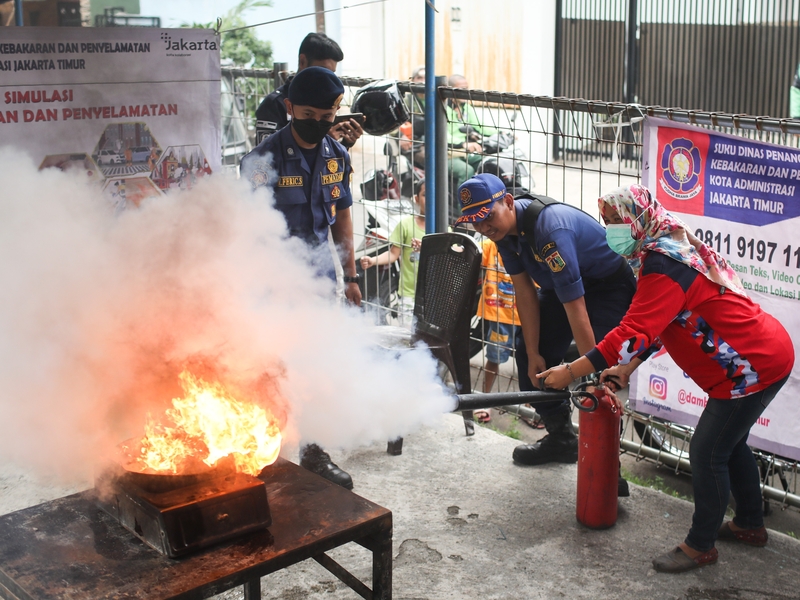
He proposed that 50 high-risk RWs receive intensive preventive interventions, including electrical and MCB checks, fire truck access inspections, APAR provision, and evacuation routes.
“Prevention isn't about finding someone to blame. It's about spotting risk points before they turn into disasters," he explained.
He further emphasized that the success of fire mitigation should be gauged not merely by the response time of personnel arriving at the scene, but equally by the capability to suppress incident rates across high-risk regions.
He stressed that government-community collaboration is vital, covering safe electrical education, APAR use, evacuation routes, and early reporting down to the RT/RW level.
"Hopefully, there are no more fires. But hope isn't enough. The government must use data to identify peak risks, assign action, and fix vulnerabilities before fires start," he stated.