Pramono Pitches 4 Bylaws to Fortify Jakarta Finances, BUMDs
Reported by Dessy Suciati | Translated by Nugroho Adibrata
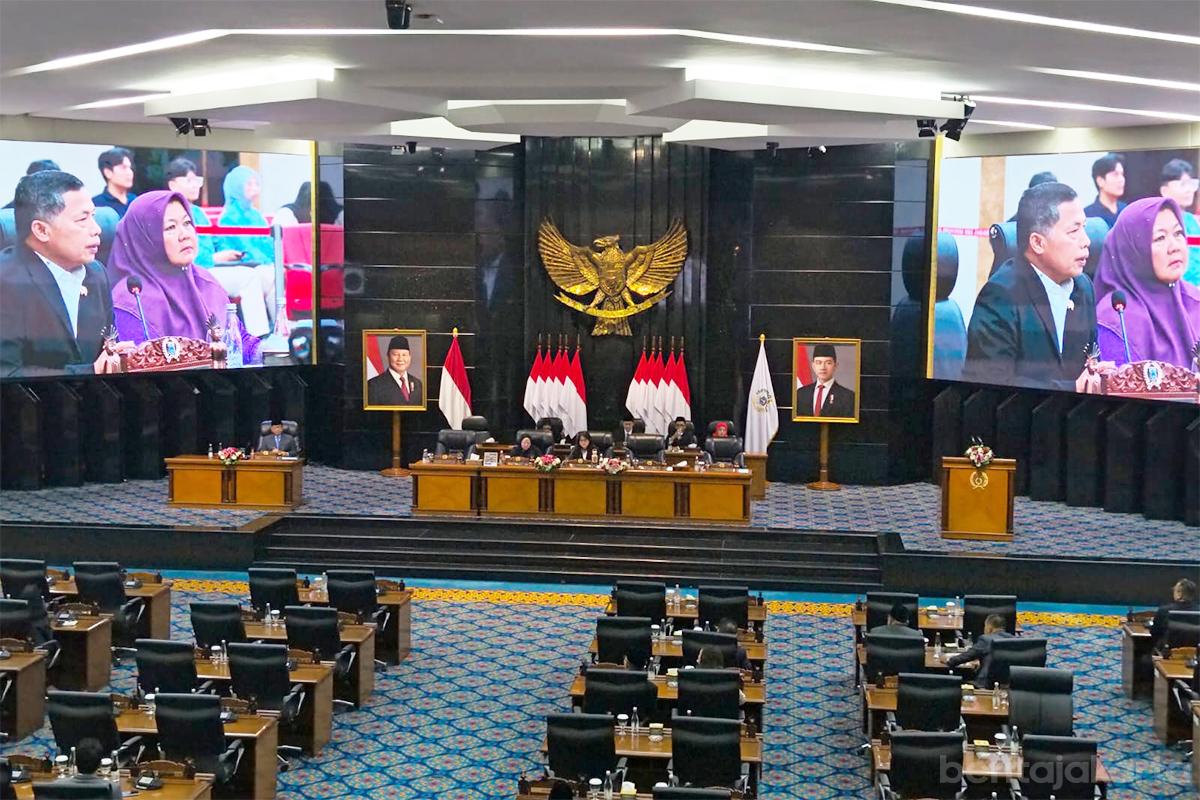
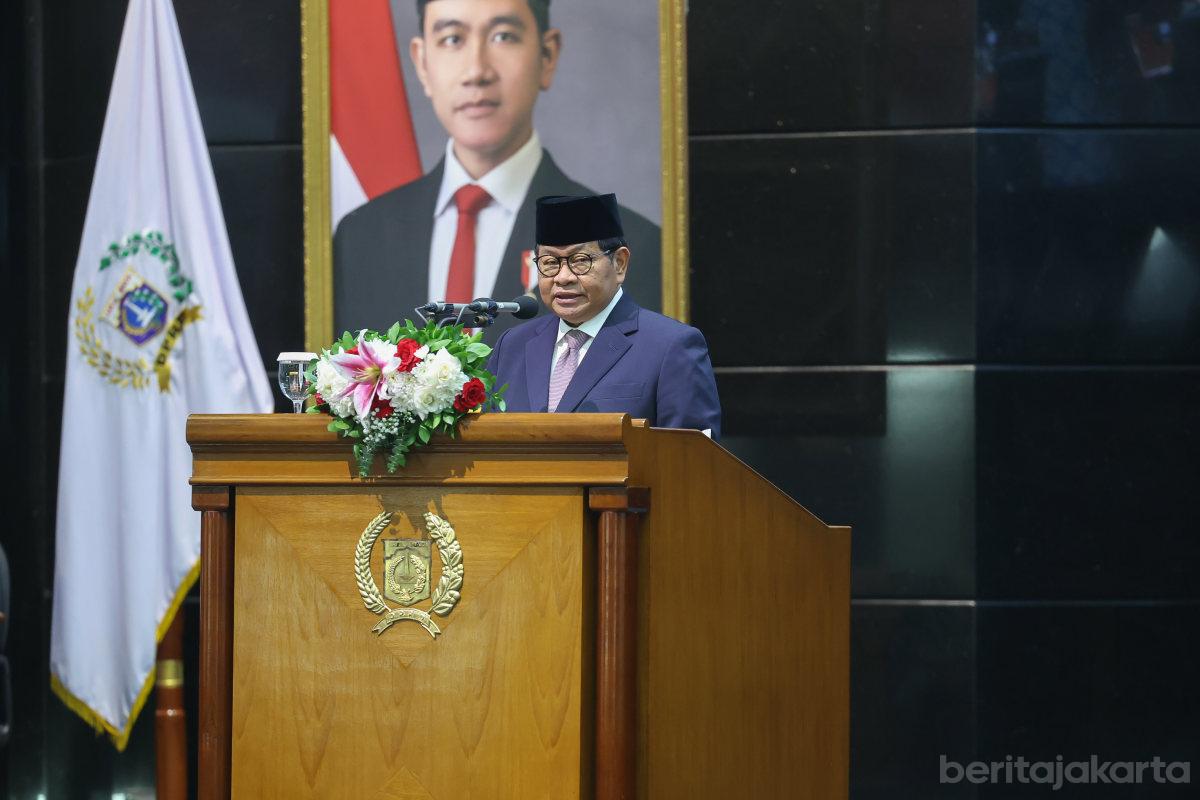
Jakarta Governor Pramono Anung presented four strategic draft bylaws during a plenary session of the Jakarta Legislative Council (DPRD).
Jakarta government needs to set up a Reserve Fund
The four draft bylaws cover the establishment of a Regional Reserve Fund, the legal entity conversion of PAM Jaya into PT Air Minum Jaya (Perseroda), the institutionalization of PT Bank Jakarta (Perseroda), and the legal status transformation of PT Transportasi Jakarta into Perseroan Terbatas Transportasi Jakarta (Perseroda).
First, regarding the draft bylaw on the Regional Reserve Fund, Pramono stated that City Hall plans to set aside Rp 5.6 trillion to sustain long-term city infrastructure.
Pramono, NYC Mayor Discuss Transit and Municipal BondsTargeted sectors include public transportation, flood control and water management, housing, and healthcare and educational facilities, among others.
He explained that funding needs exceed single-year budgets, requiring both city budget (APBD) optimization and planned creative financing.
“To guarantee the sustainability of this creative financing, the Jakarta government needs to set up a Reserve Fund," he expressed, at the City Council building, Thursday (10/1).
The Rp 5.6 trillion Regional Reserve Fund will be allocated gradually based on issued tenors and series, sourced from APBD surpluses and revenue allocations per statutory rules.
“Until utilized, the Reserve Fund can be invested in instruments that account for risk, safety, yield, and liquidity," he explained.
The Reserve Fund is projected to serve as a fiscal tool to mitigate risks arising from municipal financing repayment obligations.
Regarding the draft bylaw to transform municipal water operator Perumda Air Minum Jaya into a limited liability company, PT Air Minum Jaya (Perseroda), the Jakarta government continues to press ahead with its enactment.
The bylaw seeks to ensure residents' basic needs for safe, affordable, quality, and sustainable piped water are met, while mitigating land subsidence caused by groundwater use.
“This drive aligns with the goal of 100 percent piped water coverage by 2029, which necessitates the accelerated development of Drinking Water Supply System (SPAM) infrastructure,” he added.
With projected investments reaching Rp 27.8 trillion by 2029, the draft regulation raises PAM Jaya's authorized capital from Rp 5.4 trillion to Rp 19.2 trillion, with Rp 4.8 trillion in paid-up capital.
“Capital augmentation will be implemented gradually and selectively, considering investment needs, regional financial capacity, company performance, corporate mechanisms, and statutory rules," he noted.
Third, regarding the PT Bank Jakarta draft regulation, Pramono stated that renaming PT Bank DKI to Bank Jakarta and updating its legal form aim to strengthen institutional capacity.
“This step complies with statutory rules while reinforcing its identity and role in supporting development and public services," he continued.
To bolster capital capacity and support business development, Bank Jakarta's authorized capital will be raised from Rp 11.5 trillion to Rp 26 trillion, featuring a paid-up capital by Rp 6.578 trillion.
He anticipates that this reinforcement will expand commercial capacity through enhanced credit distribution and core business development, while concurrently reinforcing Bank Jakarta's contribution to economic growth and municipal development
Lastly, the package includes the draft regulation on converting the legal status of PT Transportasi Jakarta into Perseroan Terbatas Transportasi Jakarta (Perseroan Daerah).
Pramono stated that this institutional adjustment would widen PT Transportasi Jakarta’s business scope to bolster more integrated mass transportation services.
Transjakarta’s business mandate is getting a massive upgrade. No longer confined to city streets, the transit giant is setting its sights on waterborne routes and aerial transit, backed by full authority to engineer and manage its own next-generation transport networks.
Better yet, City Hall is empowering the operator to monetize new frontiers, venturing boldly into vocational education, advisory services, and cutting-edge IT platforms.
“This is about transforming Transjakarta into a full-fledged mobility champion. It’s not just about moving people—it’s about seizing new market opportunities, elevating passenger experiences, and driving true corporate independence," he explained.
Further, PT Transportasi Jakarta’s commercial reach will expand across national and international territories. To underwrite these growth ambitions, the company's authorized capital will climb from Rp 5.225 trillion to Rp 13.4 trillion, with paid-up capital standing at Rp 3.351 trillion.
Tabling the four strategic draft bylaws, Pramono expressed confidence that council deliberations will proceed smoothly toward final legislative approval.