Waste Sorting and Processing Heroes Expected to Inspire Environmental Care Movements
Reported by Fakhrizal Fakhri | Translated by Nugroho Adibrata
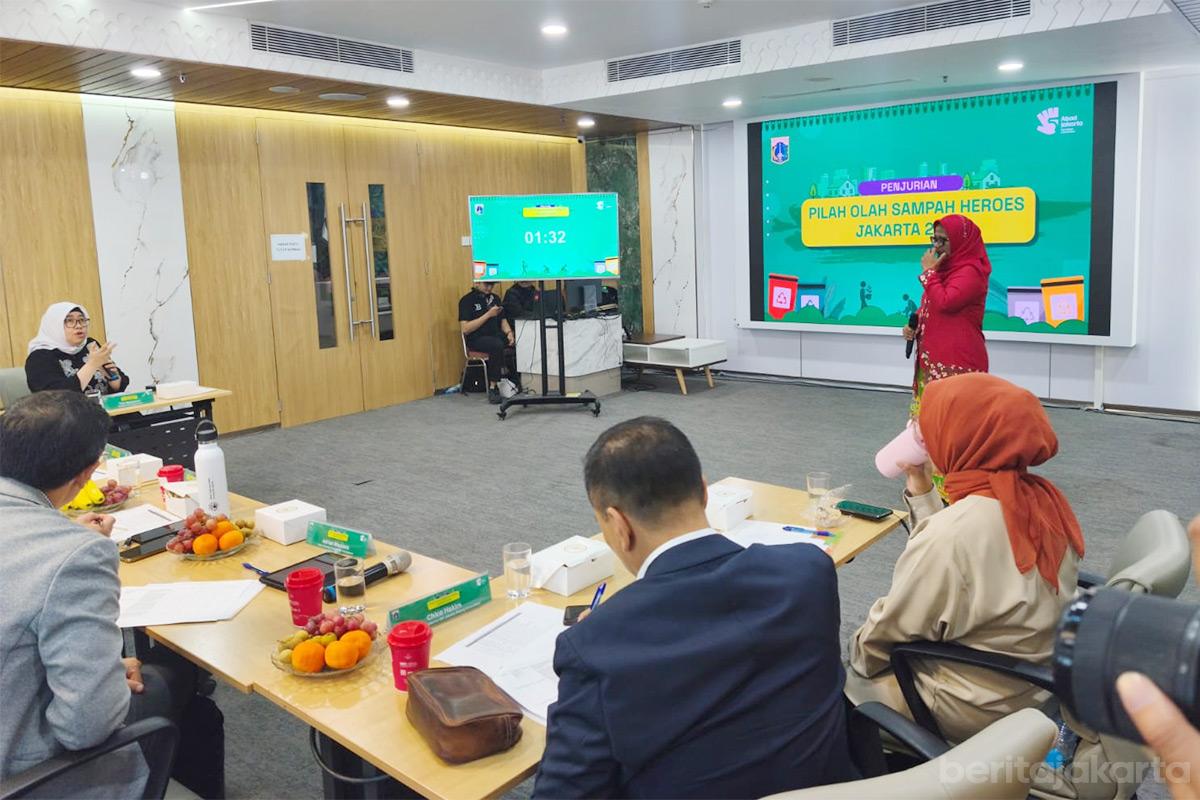
10 finalists of the Waste Sorting and Processing Heroes 2026 took part in the final presentation and interview session at the Palang Pintu Room in Grha Ali Sadikin, Jakarta City Hall, Monday (11/9).
Jakarta can never tackle this issue alone
Jakarta Communication, Informatics, and Statistics Agency (Diskominfotik) Head Marulina Dewi noted that the Waste Sorting and Processing Heroes program is the Jakarta government's way of honoring residents who have proactively and consistently spearheaded waste sorting and management in their local communities.
She emphasized that tackling Jakarta's waste challenges requires collaborative action between the government and all layers of society. Additionally, the program acts as a catalyst to accelerate the implementation of Gubernatorial Instruction Number 5 on Waste Sorting and Processing.
Chevie Transforms Waste into Economically Valuable Products"Waste management is not something we can overlook; solutions must be found. Jakarta can never tackle this issue alone—it requires a collective effort with the community," she expressed.
Marulina explained that the 10 finalists are grassroots catalysts within their communities, envisioned to serve as role models for fellow residents. She emphasized that waste sorting and management initiatives must originate at the individual level before scaling up to families, neighbors, local RT/RW units, and ultimately blossoming into a city-wide movement.
"Truly, these individuals are deserving heroes whose actions should be emulated by the wider public," she concluded.
For its inaugural edition, 173 participants registered online. Applicants were evaluated based on key criteria, including having independently driven waste sorting and management actions and possessing the ability to mobilize others to follow suit.
The selection process unfolded across four distinct stages. From the initial 173 entries, 24 candidates cleared the administrative screening and preliminary interviews with the technical panel. This was followed by on-site field verifications, narrowing the field down to 15 candidates, before the final 10 finalists were officially chosen for the concluding round.
In the final round, each contender was allocated 15 minutes—five minutes to present and 10 minutes for a question-and-answer session with the judging panel. The evaluation was conducted by a multidisciplinary jury comprising waste management practitioners, regional agency representatives, and media figures.
Marulina hoped that the finalists would transparently and authentically share their grassroots experiences and campaign milestones. She voiced optimism that the participants' best practices would inspire a wider audience of residents to actively engage in Jakarta's waste management efforts.
"We have navigated four stages up to this point, and today marks the final pinnacle of the selection process," she concluded.