Road to 500 Years: Measuring Jakarta's True Prosperity Through Adam Smith's Philosophy
Reported by Fakhrizal Fakhri | Translated by Nugroho Adibrata
From its roots as the trading port of Batavia to its rise as a hub of government, business, and services, Jakarta has continuously evolved with the times. Highways, public transit, skyscrapers, and business districts stand as milestones in the city's journey toward becoming a global metropolis.
No society can surely be flourishing and happy
Yet behind this modern skyline lies a fundamental question: how broadly is Jakarta's prosperity actually shared by all its residents?.
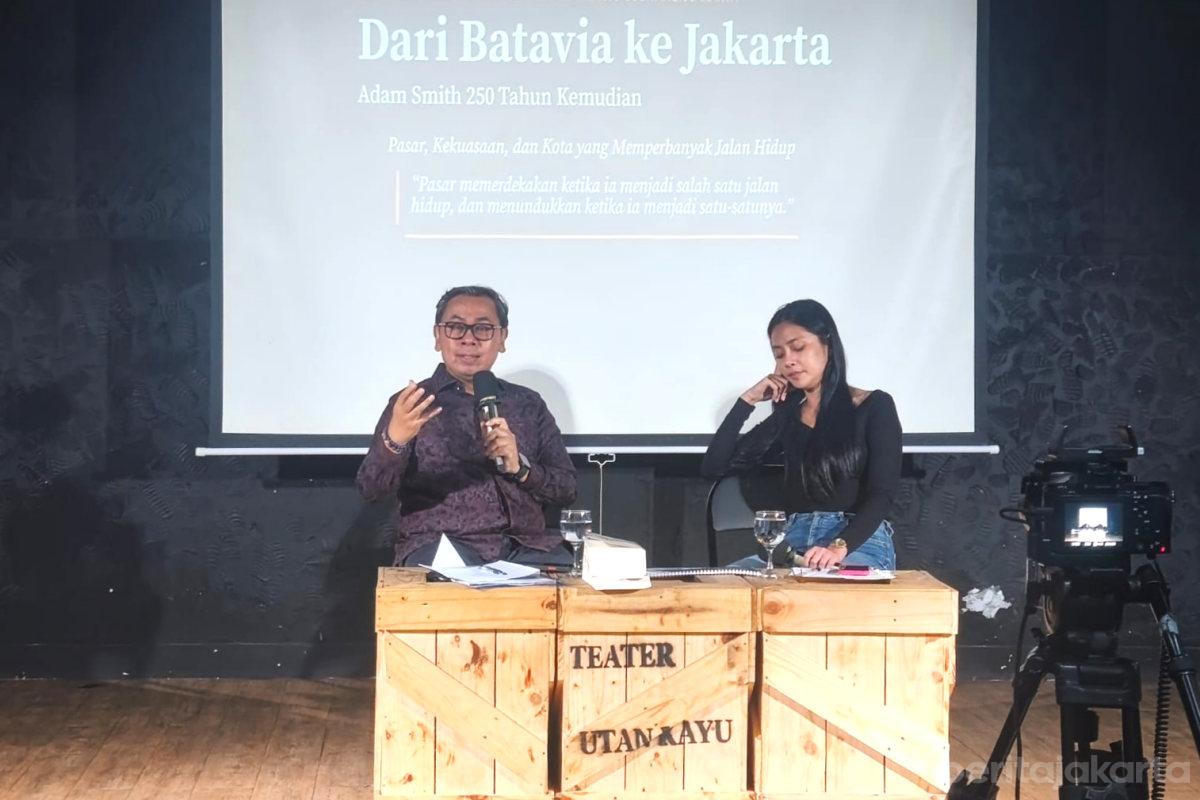
That question framed the reflection of Yustinus Prastowo, Special Staff Deputy Coordinator to Jakarta Governor and Vice Governor, during a lecture titled "From Batavia to Jakarta: Adam Smith 250 Years Later." He invited participants to examine Jakarta's urban development through the lens of Scottish philosopher and economist Adam Smith, who published The Wealth of Nations in 1776.
Rano Invites Seoul Vice Mayor to Jakarta's 500th Anniversary CelebrationAs Smith famously noted: "No society can surely be flourishing and happy, of which the far greater part of the members are poor and miserable."
To Prastowo, that message remains a vital yardstick for measuring Jakarta's progress. True prosperity cannot be measured solely by economic growth, towering skyscrapers, or investment figures. Above all, urban development must expand opportunities for people to build better lives—especially for vulnerable communities.
This perspective echoes the capability approach of Indian economist and philosopher Amartya Sen, which defines human well-being through the real opportunities and freedom people have to shape their lives. Income alone is not enough; access to public facilities, jobs, quality education, and healthcare ultimately determines how far someone can thrive.
Public transit is a prime example—it is far more than a way to get from point A to point B. Networks like the MRT, LRT, and Transjakarta widen access to employment and essential services while slashing commute times and boosting productivity, particularly for millions of daily commuters from satellite cities like Bekasi, Depok, Bogor, and Tangerang.
Beyond transit connectivity, Prastowo underscored the need for affordable housing in strategic neighborhoods. Living closer to work, healthcare, and hubs of daily life eases the commute and gives families more time together. He pointed to opportunities for vertical housing in areas like Menteng and Kuningan backed by accessible financing schemes.
Residents should also share in the gains of infrastructure growth through land value capture. This mechanism lets the administration tap into rising land values driven by public infrastructure projects and channel those gains back into urban needs.
"When benefit value rises, that surplus is captured by the region—and to prevent corruption, it isn't taken as cash, but in the form of physical goods," Prastowo said during the Public Lecture From Batavia to Jakarta: Adam Smith 250 Years Ahead at Teater Utan Kayu, Matraman, East Jakarta, Thursday (11/26).
Inclusive urban development must also safeguard the livelihoods of small-scale vendors and traditional markets. Upgrading sidewalks and public spaces needs to go hand in hand with protecting how everyday residents earn a living—through market revitalization, proper accessibility, affordable stall rents, and fair supply chains that ensure small businesses aren't left behind.
Inequality remains another pressing hurdle. Jakarta's Gini ratio of 0.435 and poverty rate of 3.96 percent show that economic growth alone does not automatically close the wealth gap. Future development must ensure that communities with limited access are not left further behind.
He also underscored the need to manage Regional-owned Enterprises (BUMDs) professionally, transparently, and in the public interest. Rather than focusing solely on profit, BUMDs must deliver tangible benefits to Jakarta residents.
He pointed to Jakarta Governor Pramono Anung's merit-based approach to appointing BUMD executives.
"When Mr. Pram appoints BUMD directors, he doesn't know who they are beforehand—and he only meets them after they've been selected, because an independent panel of professionals handles the vetting," he added.
In Adam Smith's philosophy, evaluating an action is also tied to the concept of the impartial spectator—the capacity to view an issue objectively through someone else's eyes. This principle serves as a litmus test for urban policy: does public transit truly make daily life easier for residents, is housing genuinely affordable, are small-scale vendors protected, and are the gains of development broadly shared?.
Five centuries of Jakarta's evolution—from colonial Batavia to a modern metropolis—reflect the sweeping transformations the city has undergone. Yet true progress cannot be measured solely by economic growth or a changing skyline.
Echoing Adam Smith's philosophy, genuine prosperity rests on people's ability to build better lives. As Jakarta approaches its fifth century, its real measure of success will not be how big the city grows, but how widely the opportunities and gains of development are shared by every resident.