Vice Governor Explains the Urgency of Changing Regional Tax and Retribution Regulations
Reported by Budhi Firmansyah Surapati | Translated by Rizky Mawardi
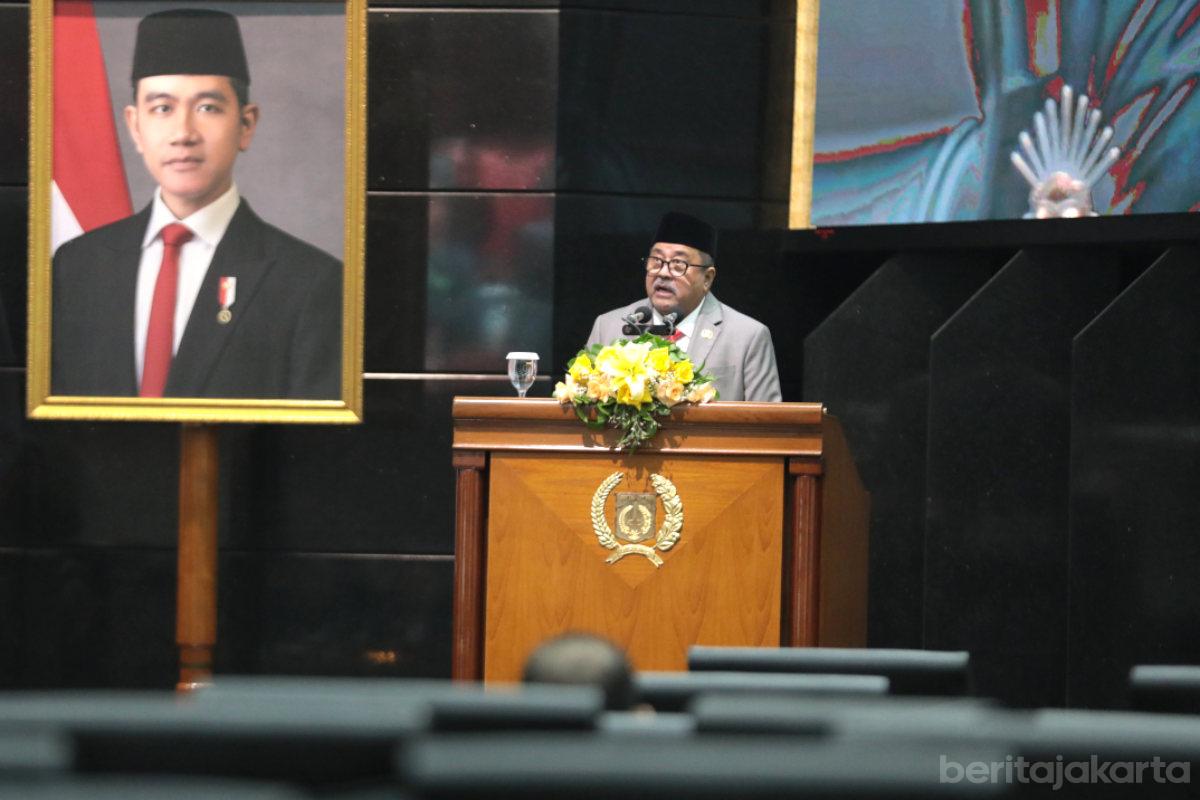
Jakarta Vice Governor, Rano Karno, explained the urgency of changing Regional Regulation Number 1 of 2024 about Regional Taxes and Levies at the Plenary Session of the Jakarta City Council, Monday (6/29).
provide legal certainty
Rano emphasized that the collection of regional taxes and levies is still one of the mainstays of the Jakarta Province's Regional Original Income (PAD).
Rano Unveils Jakarta’s Education Policy Roadmap"Almost all development financing activities in Jakarta come from regional tax and levy revenues," he said.
Rano stated that the contribution of tax and levy sector revenue is vital for the continuity of government activities and physical and non-physical development in Jakarta.
"This proposed change is in order to provide legal certainty in efforts to collect regional taxes and levies," he added.
Rano explained that Regional Regulation Number 1 of 2024 has been in effect for almost three years and has undergone numerous assessments and evaluations of the material contained therein.
"It is hoped that the material changes to this regional regulation can encourage the growth of economic activity in the community," he hoped.
Rano explained that several main points in the amendments to Regional Regulation Number 1 of 2024 about Regional Taxes and Regional Levies, such as the clarification of the definition of public vehicles in the context of collecting Motor Vehicle Fuel Tax (PBBKB).
"This point is in the context of implementing a 50 percent tariff," he explained.
Then, regarding the confirmation of the exemption of certain goods and services tax objects (electricity), in accordance with the provisions of Government Regulation Number 25 of 2021 about the Implementation of the Energy and Mineral Resources Sector.
"Furthermore, regarding the expansion of the exemption for advertising tax objects," he continued.
Next, the expansion of exemptions for cleaning services for public educational institutions. Furthermore, the next point concerns changes to several other regional levy collection rates to keep pace with current developments and accommodate the needs of the collectors.
"The Executive hopes this explanation will facilitate discussions in the next stages, allowing this Draft Regional Regulation to be carefully considered and approved as a Regional Regulation," he appealed.