Gelari Pelangi in Pela Mampang Educates on Waste Sorting
Reported by Tiyo Surya Sakti | Translated by Rizky Mawardi
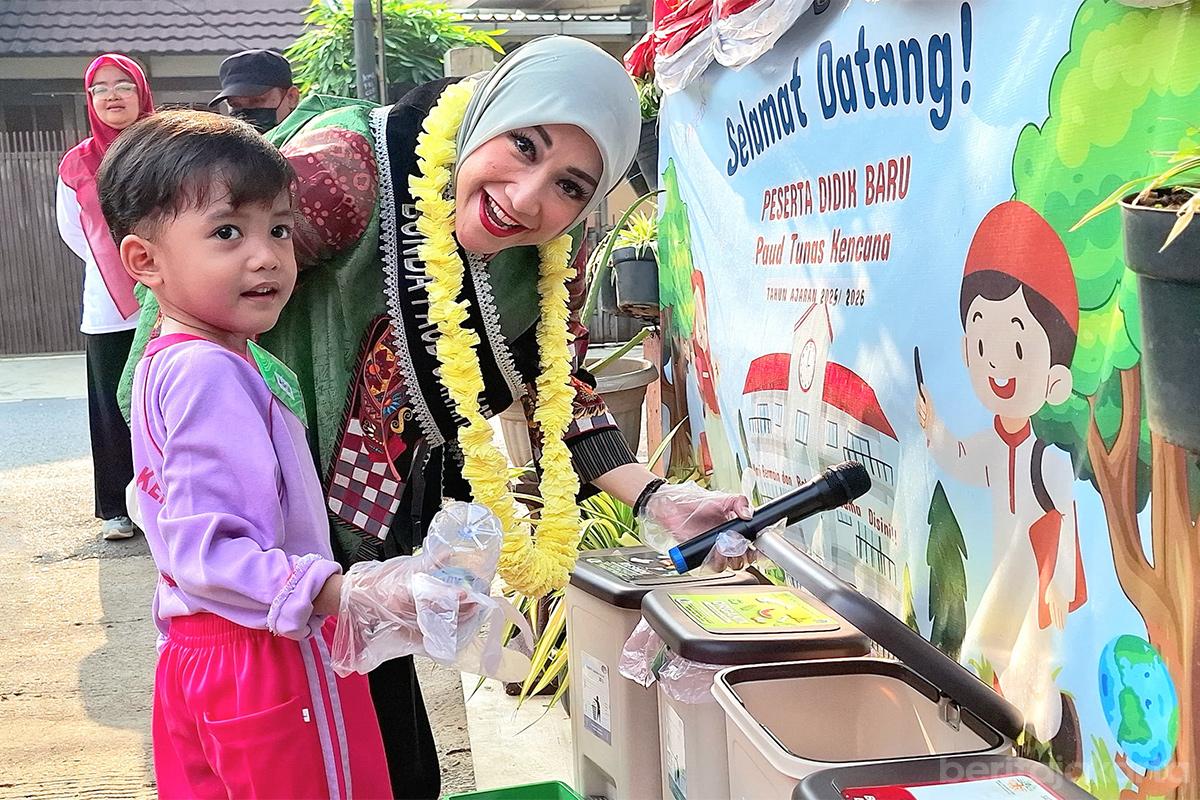
The roadshow for the "Indonesian Family Movement for Improving Education Quality and Economic Management" (Gelari Pelangi), held at the Tunas Muda BKB PAUD in Pela Mampang, Mampang Prapatan, South Jakarta, highlighted the importance of waste sorting from an early age.
Sorting waste by category
Azizah Syafrin, Chairperson of the South Jakarta Family Welfare Empowerment (TP PKK) Team, stated that Gelari Pelangi is a program derived from the central level aimed at revitalizing the family economy while fostering public interest in reading at the Community Unit (RW) level.
Central Jakarta PKK Plants 4,682 Rice-Substitute Crops at 48 Locations"In Pela Mampang, I see that reading corners have already been established in every RW. This initiative would be excellent if implemented in collaboration with the local youth organization (Karang Taruna) and supported by Corporate Social Responsibility (CSR) programs from companies located in this strategic area," she said, Tuesday (9/1).
Azizah explained that the PKK also plays a crucial role in preventing school dropouts, a problem currently driven by the widespread use of gadgets. The challenges faced today are no longer merely a matter of cost, but also include a decline in children's motivation to learn due to being overly engrossed in playing games at home.
In addition to education, Azizah emphasized the importance of the role played by all stakeholders, including educators and the PKK, in raising children's awareness about sorting waste from an early age.
"We are also here to provide education on the importance of environmental waste management whether through sorting waste by category or processing it into items with economic value," she added.
In developing the Family Income Enhancement Effort (UP2K) initiative, Azizah encourages utilizing a strategic location at the urban village office to set up a small canteen managed by the PKK. The canteen could sell office supplies as well as handicrafts made by local residents.
To strengthen the capital base of residents' businesses, Azizah plans to partner with companies through CSR programs to provide capital assistance to UP2K groups. This assistance will be distributed through a phased selection process scheduled to begin this coming November or December.
"We will encourage our residents' flagship products to be showcased at exhibitions, including those abroad, to boost their visibility. However, a robust curation process is also essential," she continued.