Pramono: Climate Action Must Deliver Tangible Benefits to Residents
Reported by Dessy Suciati | Translated by Maria Inggita
Jakarta Governor Pramono Anung stressed the importance of climate action having a direct impact on people's daily lives.
Tangible benefits that people can see and experience in their daily lives
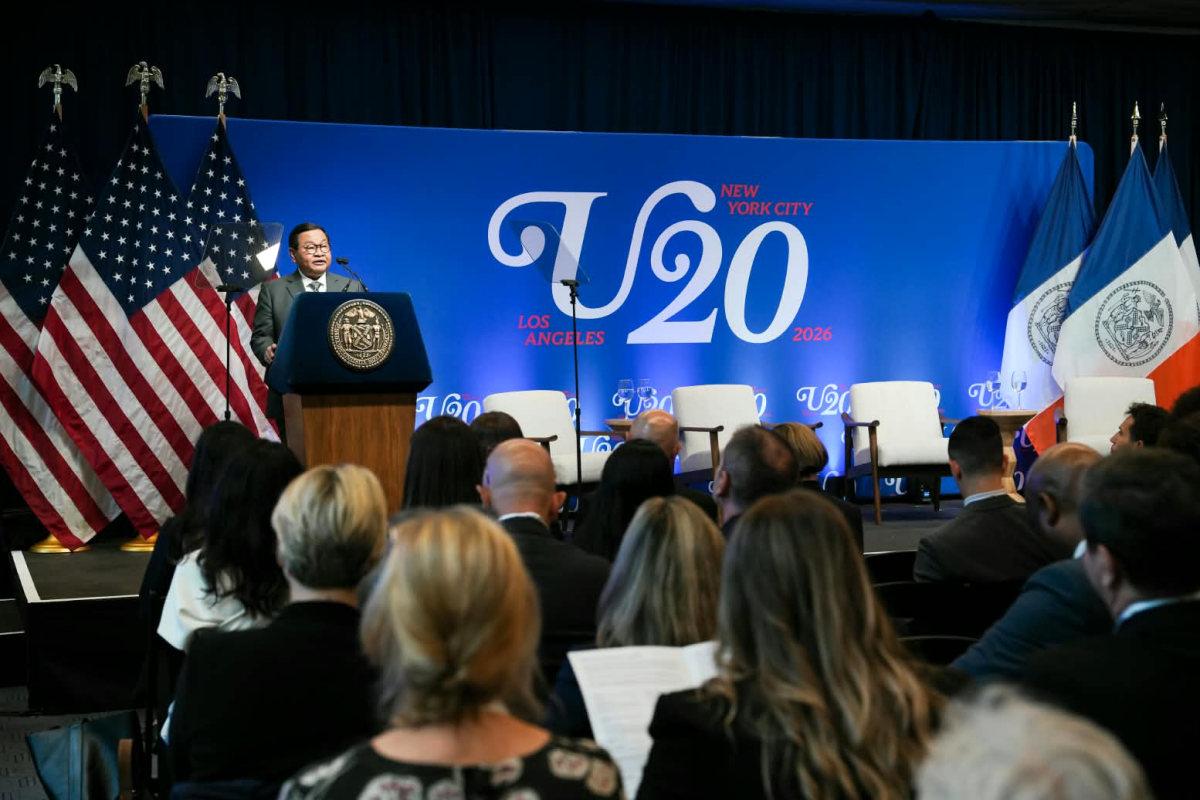
Speaking as a keynote speaker at the Heat Roundtable in New York, United States, on Sunday (9/20), he said addressing climate change should not focus solely on reducing emissions, but also on creating a city that is cleaner, healthier, more affordable, and more comfortable to live in.
Pramono Departs for New York to Discuss Climate and Food Crises"Climate action must deliver tangible benefits that people can see and experience in their daily lives through cleaner transportation, better public spaces, cleaner energy, and an improved quality of life," Pramono said in a press release issued by the Jakarta Provincial Government on Friday (9/25).
At the forum, Pramono also outlined Jakarta's challenges as a metropolitan city with high mobility. Around four million people travel in and out of Jakarta from surrounding areas every day, particularly during peak hours, while the city generates around 9,000 tons of waste daily.
According to Pramono, these issues are interconnected and affect the quality of life of Jakarta residents.
"Traffic congestion, air pollution, and waste do not stand alone. All three are directly linked to mobility, health, and people's quality of life. Therefore, Jakarta's climate policies are designed to deliver changes that residents can feel," he explained.
To address these issues, the Jakarta Provincial Government is transforming public transportation by integrating the MRT, LRT, Transjakarta, Transjabodetabek, and commuter rail networks. Public transportation connectivity in Jakarta has now reached around 93 percent.
"We are changing the way people move around Jakarta. We want to provide reliable and affordable alternatives to private vehicles while reducing traffic congestion and emissions," he added.
Expansion of the public transportation network is also underway. The Jakarta Provincial Government aims to expand the MRT network from around 15.7 kilometers to 46.5 kilometers by 2034, while the LRT network is planned to reach 75 kilometers by 2029.
Jakarta is also stepping up the electrification of public transportation. As of 2026, Transjakarta operates around 4,792 buses, including 500 electric buses. This is part of efforts to provide more environmentally friendly public transportation.
According to Pramono, public transportation development is not solely about reducing traffic congestion. It must also be part of the solution to climate change while expanding access to mobility for residents.
In addition to transportation, Jakarta is strengthening its waste management system. With around 9,000 tons of waste generated each day, the Jakarta Provincial Government is shifting waste management from the collect-transport-dispose model to the sort-transport-process model.
Since August 1, 2026, Bantargebang Integrated Waste Management Facility (TPST) has only accepted residual waste. As part of this shift, waste sorting and processing are being promoted at the source.
Together with the central government, Jakarta is also developing waste-to-energy (WTE) facilities. The two facilities are intended to process waste into energy while reducing the amount of waste sent to final disposal sites.
The Jakarta Provincial Government is also strengthening community-based waste management through the Waste Sorting Movement and recycling activities.
Pramono further noted that climate resilience is built not only through large-scale projects, but also by changing how cities manage mobility, energy, waste, and public spaces.
"We must not see climate action as something separate from people's daily lives. The measure is simple: Is the air cleaner? Are journeys easier? Are public spaces better? And is the environment healthier?" he said.
Jakarta, he added, continues to learn from major cities around the world in expanding green open spaces and strengthening resilience to the impacts of climate change, including rising urban temperatures.
He stressed that Jakarta is open to exchanging experiences and working with other cities to find solutions suited to their respective circumstances.
"Jakarta is ready to share best practices, learn from other cities, and turn our shared climate goals into practical solutions," Pramono emphasized.
Pramono's participation in the Heat Roundtable was part of his working visit to New York to attend the 2026 Urban 20 (U20) Mayors Summit. The forum brings together leaders from major cities around the world to exchange experiences on urban heat challenges and climate resilience. The Heat Roundtable was held with C40 Cities, Harvard University's Salata Institute for Climate and Sustainability, and the Atlantic Council's Climate Resilience Center. Several city leaders also attended, including the mayors of Paris and Freetown.