
Tebet Batik Festival Preserves Culture, Empowers Local MSMEs
Reported by Tiyo Surya Sakti | Translated by Nugroho Adibrata
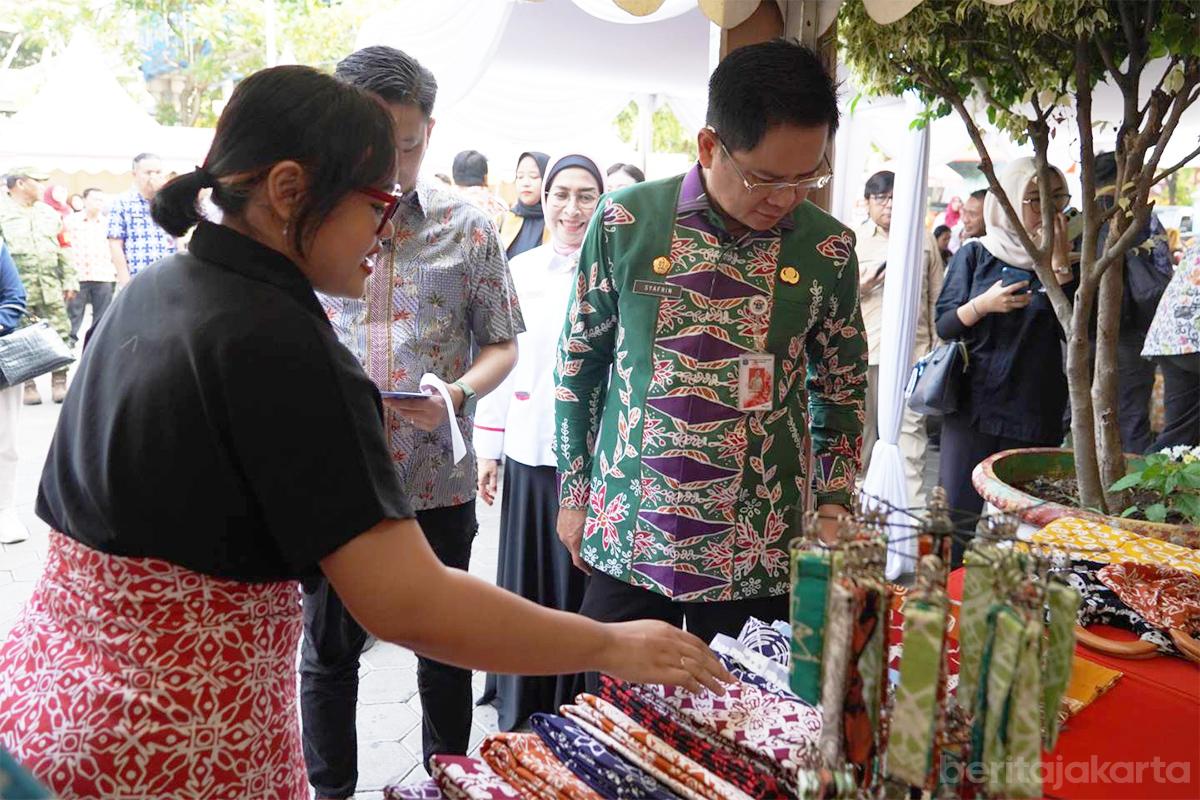
The Tebet Batik Festival 2026 at the South Jakarta Tebet Sub-district Office courtyard brought together cultural preservation and economic empowerment, celebrating National Batik Day by boosting local creative industries and MSMEs.
This collaboration is crucial to ensuring batik remains relevant
The Tebet Batik Festival serves as more than an annual gathering, marking a key opportunity to deepen public appreciation for batik as a national cultural legacy, according to South Jakarta Mayor Syafrin Liputo.
Liputo emphasized that batik needs to go beyond display cases and become part of daily living.
9,387 Visitors Join Batik-Making Classes at Textile Museum"We shouldn't just look at batik—we must embody it. Everyone should embrace, wear, and actively promote batik in their daily lives," he expressed, Thursday (10/22).
Featuring 55 collaborators, he explained, the event underscores the vital partnership between local government, small business owners, and creative sectors.
"This collaboration is crucial to ensuring batik remains relevant amidst rapid globalization," he explained.
He outlined three strategic pillars for the festival: normalizing batik as everyday lifestyle, leveraging local MSMEs and creative talent for economic growth, and transforming Tebet into a competitive creative hub. The effort aligns with Jakarta’s ambition to become a global city while preserving its cultural roots.
"Mobilizing dozens of partners provides a momentum we must sustain, turning Tebet into a major center for Jakarta’s creative economy," he emphasized.
Tebet Batik Festival Organizing Committee Chairwoman Watini explained that the one-day event also aimed to instill a passion for batik art from an early age among children, youth, and the general public.
"One of our main focuses is to provide a deeper understanding of the process behind creating hand-drawn (batik tulis) and stamped batik (batik cap)," she explained.
Besides promoting cultural education, the festival serves as a hub for local economic empowerment. It provides district-assisted MSMEs and local batik crafters with a dedicated platform to showcase and market their products to a wider audience.
Watini added that the festival featured various educational and interactive activities, including a joint batik-making session on a 10-meter-long harmony batik cloth involving Family Welfare Movement (PKK) members, as well as a batik coloring competition for 50 early childhood education (PAUD) students.
"We also held a batik-making competition with 40 participants from local PKK chapters," she added.
There are also MSME fair alongside a State-Owned Enterprises (BUMN) Showcase, featuring 40 exhibition booths highlighting top local products from Tebet.
"Hope these exhibition booths will broaden the market for local goods and sharpen the competitive edge of our entrepreneurs," she hoped.
The festival's success relies on full support from CSR partners, business owners, agencies, and Tebet residents.
"It demonstrates our leadership’s core principles: communication, coordination, and collaboration," she closed.
