Commission D Emphasizes Education as Key to Reducing Inequality
Reported by Fakhrizal Fakhri | Translated by Rizky Mawardi
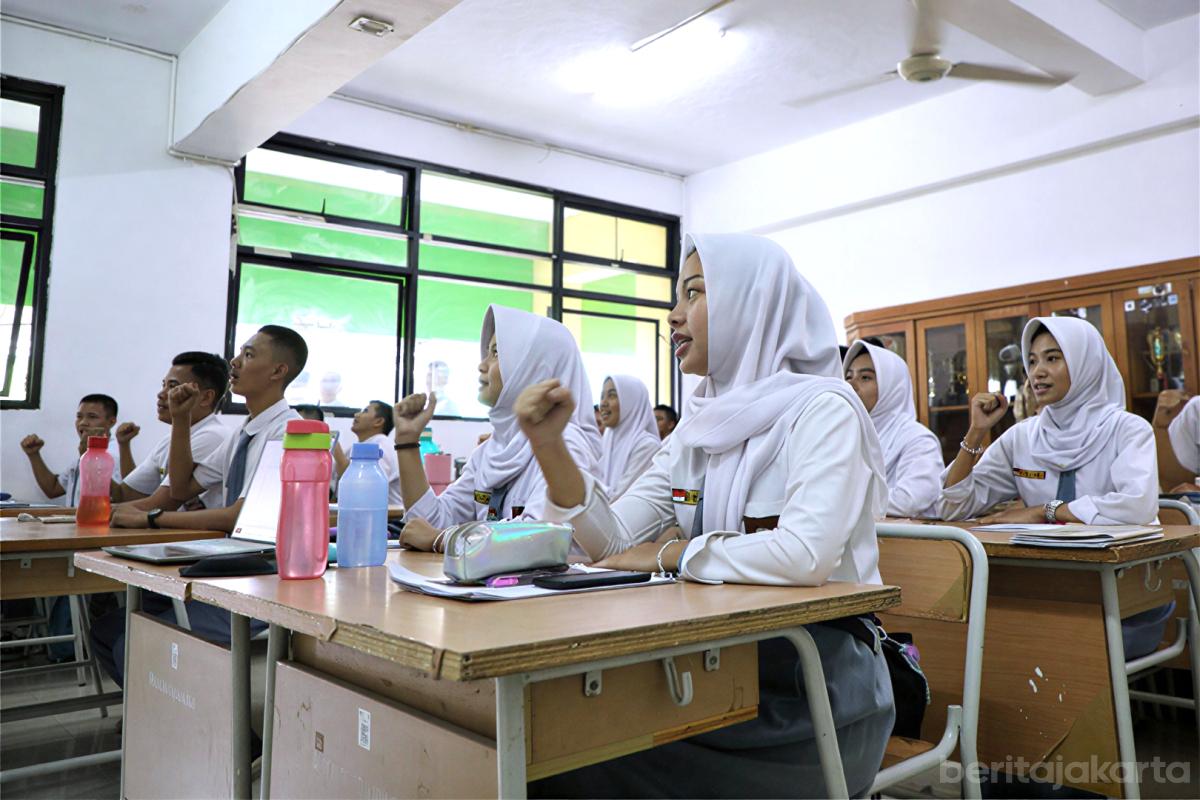
Yuke Yurike, Chairman of Commission D of the Jakarta City Council, expressed her appreciation for the Rp19.75 trillion allocated for education in 2026. She considered this budget a concrete step towards achieving social justice in Jakarta.
state must be present there
According to Yuke, the momentum of National Education Day 2026 is an important stepping stone for the Jakarta Provincial Government and City Council to strengthen their commitment to educating the nation.
Commission E Calls for Improved Education, Health, and Social ServicesThe education budget is a strategic instrument for reducing the Gini ratio or inequality, while simultaneously breaking the cycle of poverty in the capital. Social inequality, she continued, can only be addressed if all children have equal access to education, regardless of economic constraints.
"Every Jakarta resident has the right to a decent education. No child should drop out of school or become illiterate in a city as large as Jakarta simply because of their family's financial situation. The state must be present there," she said, Monday (5/4).
Of the total budget, Rp14.94 trillion, or approximately 75 percent, is allocated for personnel expenses to ensure the welfare of teachers and educational staff. Yuke believes this step is appropriate, considering that the quality of education depends heavily on the competence and well-being of teaching staff.
Furthermore, social assistance for education remains a priority. The KJP Plus program allocated Rp3.25 trillion for 707,477 students in Phase I of 2026. Meanwhile, KJMU received a budget of Rp399 billion to support the continued education of 15,825 students.
The Free Private School (SSG) program is also being expanded, with an allocation of Rp253.62 billion for 103 pilot private schools to increase educational capacity in the capital.
Yuke also highlighted the importance of equitable distribution of educational infrastructure. By March 2026, six pilot schools in West Jakarta had been rehabilitated with a total budget of Rp126.12 billion. The program is guaranteed to continue until the end of the year.
"To address the challenge of a still-high Gini ratio, the Jakarta Provincial Government must ensure that formal education and packaged learning programs are available to all levels of society. This includes strengthening vocational schools so that graduates have specific skills and can be directly absorbed into the workforce," she explained.