Draft Health Bylaw Prioritizes Basic Healthcare and Vulnerable Groups
Reported by Dessy Suciati | Translated by Maria Inggita
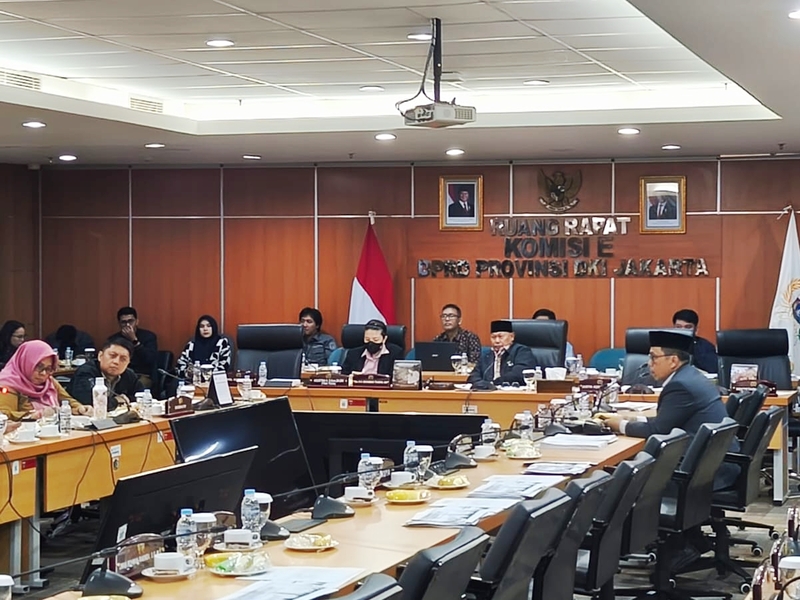
Jakarta Governor Pramono Anung attended a plenary session at the Jakarta City Council (DPRD) on Monday (5/11) to deliver the executive response to faction views on the draft bylaw revising Regional Regulation (Perda) No. 4/2009 on Regional Health System.
This draft bylaw was prepared by taking into account the real needs of Jakarta residents
In his remarks, Pramono said the draft bylaw was prepared to strengthen Jakarta's health governance system so that healthcare services become more integrated, transparent, accountable, and supported by stronger healthcare workforce capacity.
Taman Sari Health Center Intensifies Hantavirus Prevention Outreach"This draft bylaw was prepared by taking into account the real needs of Jakarta residents, including those in the agglomeration areas and the Thousand Islands," Pramono said during the plenary session at Jakarta DPRD building.
Several key issues highlighted in the discussion include synchronization with national policies, healthcare financing and budgeting, strengthening human resources capacity, subsidies, pharmaceutical resilience, and the provision of healthcare facilities.
Regarding policy synchronization, Pramono noted that the draft bylaw includes a special chapter on national priority health programs, including stunting prevention and mitigation efforts.
On healthcare financing and budgeting, he stressed that allocations would be prepared based on healthcare service needs while still considering regional development priorities and the city's fiscal capacity.
"The Executive is committed to making the health sector a priority in budget allocations because it is directly related to basic public services," he asserted.
Through the draft bylaw, the Executive also plans to strengthen healthcare workforce capacity, improve workforce distribution, provide incentives, and enhance protection and security for healthcare workers.
Pramono also ensured that the draft bylaw would regulate healthcare financing in a fair and transparent manner while prioritizing low-income residents and vulnerable groups.
"The draft bylaw already regulates health insurance, but subsidy schemes still need to be discussed further while taking into account existing regulations and regional financial capacity," he explained.
The Executive also committed to strengthening public health insurance protection through regular updates of participant data and stronger complaint-handling mechanisms.
Regarding pharmaceutical resilience and the management of buffer stocks for medicines, vaccines, and medical equipment, Pramono said the measures would include data-based planning, stronger health logistics reserves, and integrated digital distribution and monitoring systems.
In addition, the draft bylaw will strengthen the role of community health centers (Puskesmas), expand service access, and improve healthcare quality and standards across Jakarta. He added that all health centers in Jakarta, including auxiliary health centers, are currently accredited.
The Executive also highlighted the importance of social service obligations for private healthcare facilities and stricter sanctions against hospitals that refuse patients. It also supported stronger public education and wider promotive and preventive campaigns on the dangers of excessive sugar, salt, and fat consumption, ultra-processed foods, smoking, poor environmental sanitation, and unhealthy lifestyles.
"The Executive hopes this draft bylaw can be approved and enacted as a Regional Regulation according to the schedule set through the Deliberation Body," Pramono said.