49 Sacrificial Animals Distributed in Seribu Islands
Reported by Anita Karyati | Translated by Nugroho Adibrata
Ahead of Eid al-Adha 1447 Hijri, the Seribu Islands Regency Government has distributed 49 sacrificial animals across 11 residential islands.
We’ve seen an increase this year, totaling 34 cows and 15 goats or sheep prepared for shipment
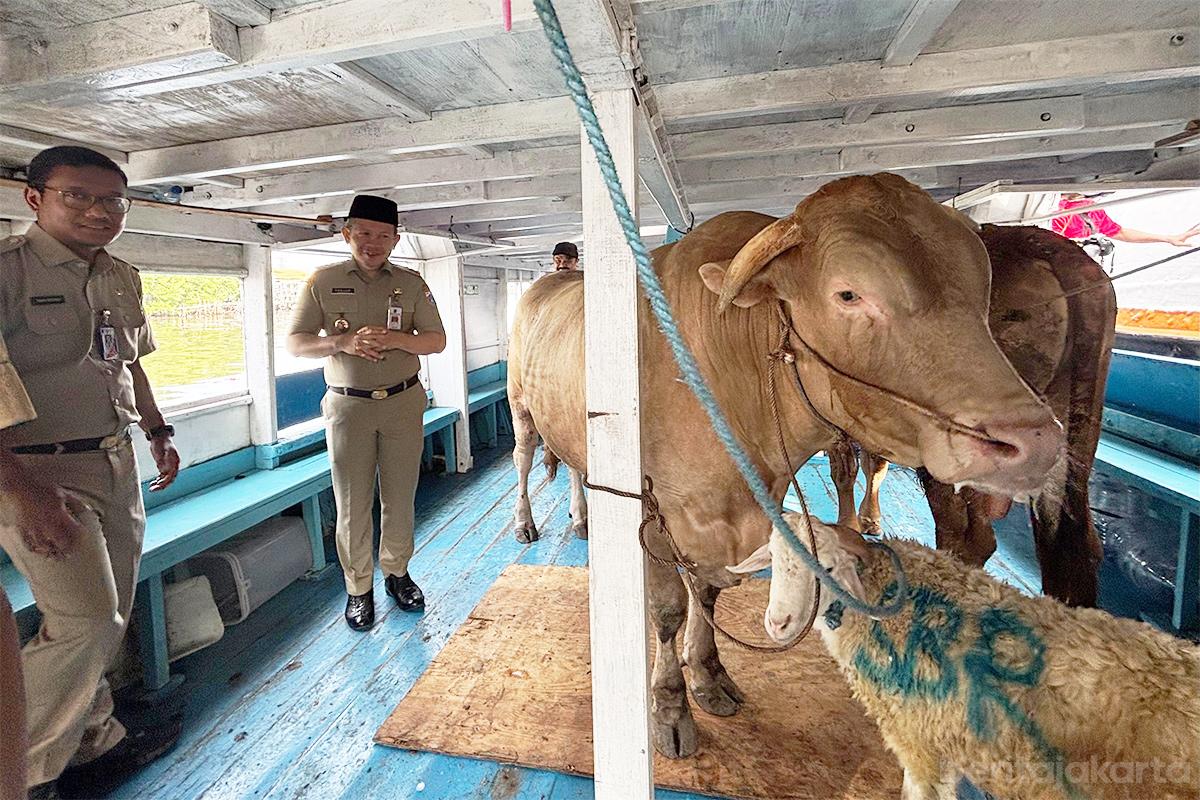
Those animals were transported today via traditional boats from Pier T, Muara Angke Port, Penjaringan, North Jakarta.
Seribu Islands Regent, Muhammad Fadjar Churniawan noted that the region's archipelagic geography poses specific hurdles for animal distribution as it requires crossing the sea. Therefore, transport arrangements are initiated early to guarantee timely arrival at the destination islands.
Jakarta Government Prepares 160 Cows for Eid al-Adha"Sacrificial animals from the mainland are being sent out ahead of time via vessels to their designated locations. We’ve seen an increase this year, totaling 34 cows and 15 goats or sheep prepared for shipment," he expressed, Monday (5/25).
He assured that all sacrificial animals being distributed have undergone rigorous health examinations by a team of veterinarians to guarantee they are free from Foot-and-Mouth Disease (FMD).
"I have coordinated with th Maritime, Agriculture, and Food Security Sub-agency (KPKP). All animals have passed both physical and administrative inspections. They are all in healthy and fit condition," he explained.
He noted that the occasion of Eid al-Adha serves as a blessing for the Islanders. Beyond its religious significance, the distribution of sacrificial meat also helps meet the nutritional needs of residents who primarily consume fish on a daily basis.
"Islanders eat fish almost every day. With these sacrificial offerings, there is dietary variety and supplemental nutrition from beef or mutton for the community," he remarked.
Fadjar expressed his appreciation for the support from donors, including Regional Apparatus Organizations (OPD), companies through Corporate Social Responsibility (CSR) programs, and the sacrificial committees that have assisted in the distribution process across the islands.
Further, he emphasized the importance of managing waste from the animal slaughtering process to ensure it does not pollute the marine environment or lead to public health issues.
"I urge that the sacrificial waste be managed properly; do not dump it into the sea. Please coordinate with the local Indonesian Mosque Council (DMI) regarding the technicalities of its handling," he stated.
Seribu Islands KPKP Sub-agency Head, Nurliati added that her office has deployed 60 personnel to oversee the health of the sacrificial animals. The team consists of internal staff supported by the Indonesian Veterinary Association (PDHI).
She explained that health inspections are conducted in two stages: ante-mortem (before slaughter) and post-mortem (after slaughter). This measure is taken to ensure that the sacrificial meat meets the "ASUH" standards—standing for Safe, Healthy, Whole, and Halal.
"A standby team is stationed on every island. They will re-examine the animals upon arrival, conduct inspections prior to slaughter, and perform meat checks after slaughter before the meat is distributed to residents," she affirmed.