Rano Karno Outlines General Policy for Jakarta's 2026 Revised City Budget
Reported by Budhi Firmansyah Surapati | Translated by Nugroho Adibrata
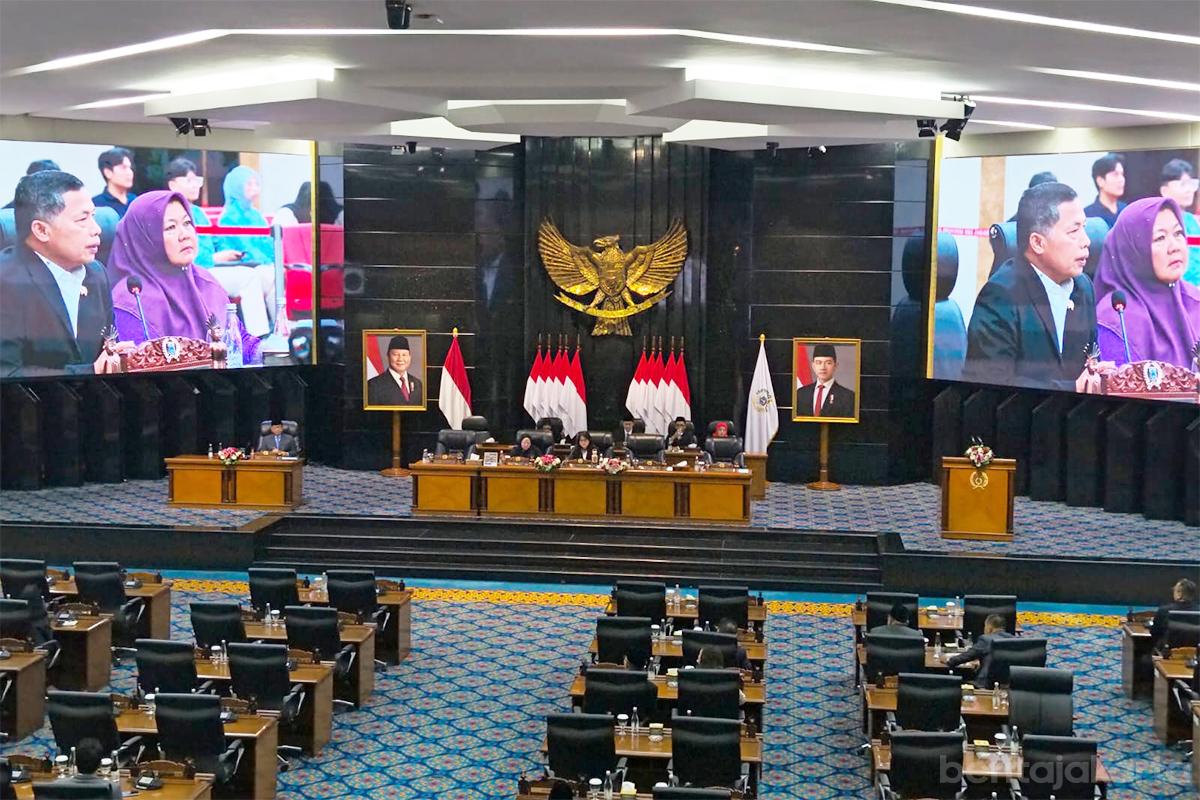
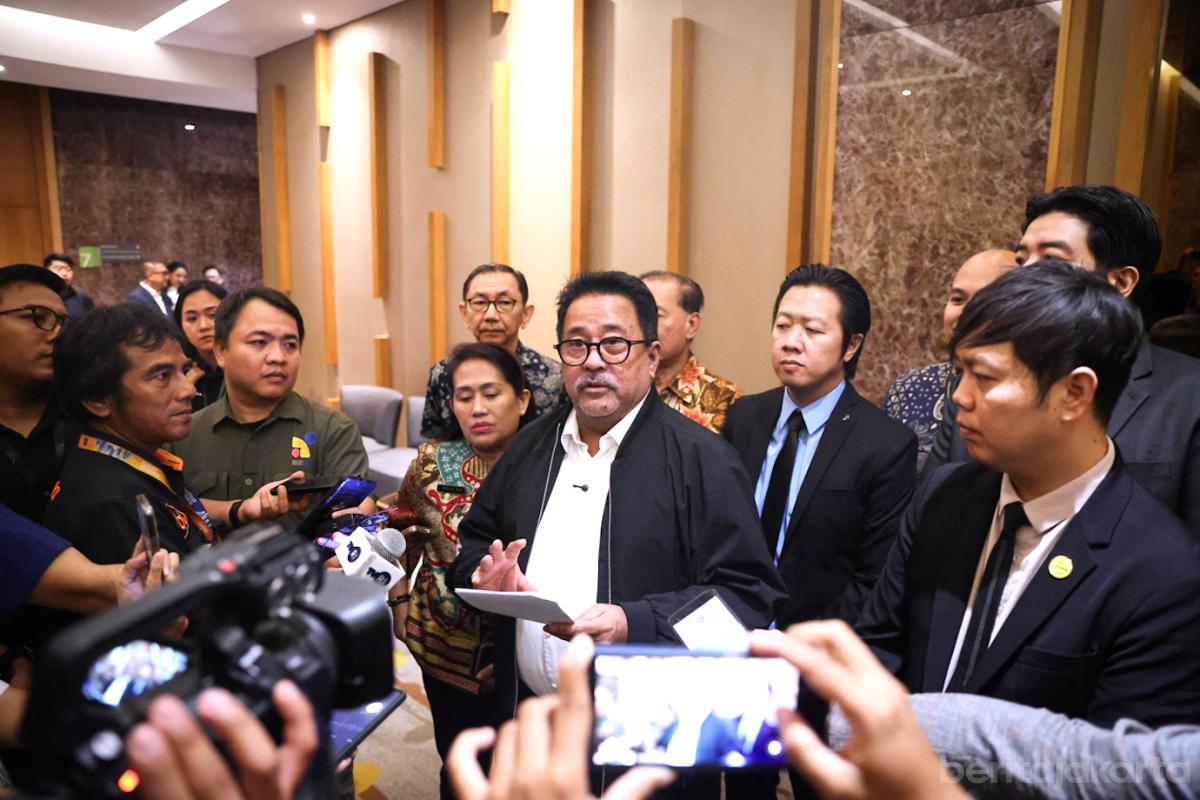
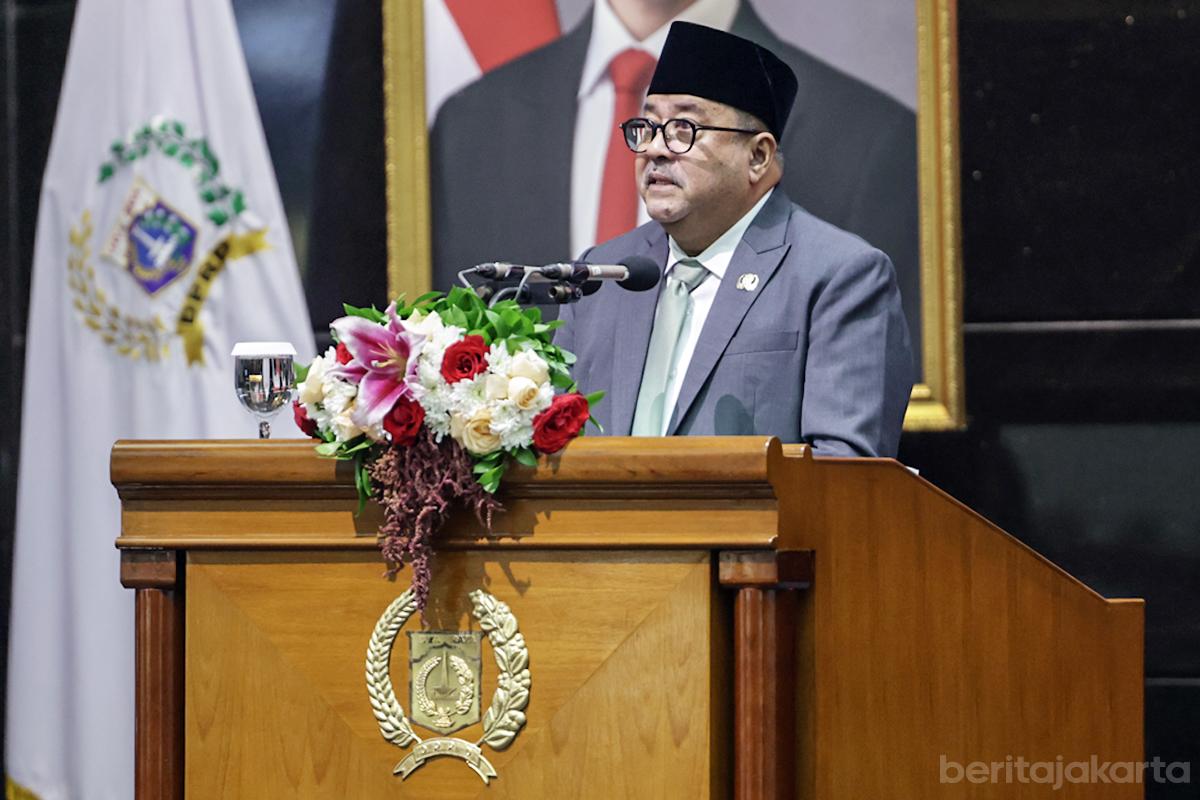
Jakarta Vice Governor Rano Karno delivered the Governor’s formal response regarding the General Policy for the 2026 City Budget (APBD) during a Plenary Session at Jakarta Legislative Council (DPRD) on Monday (8/31).
The formulation of these implementing regulations is designed to provide legal certainty
Rano explained that the policy framework for the 2026 APBD revision encompasses three primary pillars: Regional Revenue, Regional Expenditure, and Regional Financing.
Regarding Regional Revenue, he detailed that it comprises Local Taxes and Retributions, profits from Managed Separate Regional Assets, Other Valid Original Regional Revenue (LLPAD), and Transfer Revenue.
Rano Outlines Key Points of Draft Regional Regulation on Population ControlHe further elaborated on the Executive's tax and retribution policies, which involve the implementation of Bylaw No. 1/2024. This regulation aligns with Law No. 1/2022 on the Financial Relationship between the Central and Regional Governments, as well as Government Regulation No. 35/2023 on Regional Taxes and Retributions.
"The formulation of these implementing regulations is designed to provide legal certainty, enhance service quality, and improve the overall governance of regional taxes and levies," he expressed.
Regarding efforts to improve returns on Managed Separate Regional Assets, Rano explained that the executive is taking several strategic steps. These include strengthening the financial performance and asset utilization of Regional-Owned Enterprises (BUMDs), accelerating digital transformation and service innovation, and fostering synergy between BUMDs and the Jakarta government to support the regional development agenda.
To enhance the performance of Other Valid Original Regional Revenue (LLPAD), he noted that efforts are focused on exploring revenue potential, identifying bottlenecks in the collection process, and conducting rigorous revenue evaluation and reconciliation.
As for general policies, Rano highlighted the optimization of Transfer Revenue management through several key measures. These include submitting compliance reports for the disbursement of Regional Transfer Funds (TKD), aligning regional development plans with central government priorities, and maintaining intensive coordination with the Central Government to ensure that TKD management complies with established regulations.
"Concerning the General Policy for LLPAD, the focus is on coordinating the distribution of grants provided by the Central Government," he added.
Addressing Regional Expenditure, Rano noted that the framework is stipulated in the formal agreement between the executive and the legislative branches regarding the 2026 Revised APBD.
He emphasized that spending is meticulously targeted at priorities outlined in the Regional Medium-Term Development Plan and Strategic Plans to ensure alignment with Asta Cita objectives and national economic expansion.
The policy also underscores the importance of the continuity of Quick-win initiatives, Jakarta's transition into a global city, and the reinforcement of the city’s socio-economic foundations. Further, the government is committed to allocating funds to sectors with direct social impact, focusing on mandatory basic services that adhere to Minimum Service Standards (SPM) as mandated by law.
Then, the government is re-ensuring the allocation of productive spending by prioritizing core expenditures over supporting ones. It also encourages creative, innovative, and collaborative financing models, particularly in the implementation of priority programs.
"The executive also guarantees that mandatory and binding expenditures are fulfilled in accordance with minimum essential requirements," he stated.
Also, the government is conducting efficiency drives and thorough assessments of spending programs, focusing on achieving regional development priority targets while remaining mindful of the city's financial capacity.
The policy also includes the provision of aid in the form of subsidies, grants, social assistance, and financial aid. He further outlined the regional financing policy, which was formulated as a response to the dynamic financing needs and fiscal projection adjustments occurring during the implementation of the 2026 APBD.
The financing receipt policy, Rano revealed, consists of receipts from the 2025 Budget Calculation Surplus (SiLPA). Additionally, it includes Regional Debt Financing from the Central Government for the MRT Jakarta project and Regional Loan Financing from financial institutions for multi-year activities.
Additionally, financing is sourced from Central Government Regional Debt for the MRT Jakarta project and Regional Loans from financial institutions to fund multi-year initiatives. Conversely, the regional financing expenditure policy focuses on capital injections and the servicing of maturing debt principals.
Rano emphasized that these expenditures are earmarked for Regional Capital Injections into Regional-Owned Enterprises (BUMDs) under current legal frameworks, as well as the settlement of principal payments for the JEDI loans, MRT Jakarta Phase 1 loans, and debt to PT Sarana Multi Infrastruktur (Persero) under the National Economic Recovery (PEN) Program.
In the final part of his address, Rano provided the details of the Draft Regional Regulation on the 2026 Revised APBD.
He stated that the total Draft Revised Budget for 2026 amounts to Rp 79.59 trillion, a 2.13 percent decrease compared to the original 2026 APBD by Rp 81.32 trillion. Consequently, Regional Revenue in the 2026 Revised APBD is projected at Rp 69.36 trillion, representing a 2.93 percent decline from the initial budget by Rp 71.45 trillion.
"Regional Revenue is expected to be sourced from Regional Revenue (PAD) at Rp 57.87 trillion, Transfer Revenue at Rp 11.28 trillion, and Other Valid Regional Revenue amounting to Rp 207.39 billion," he revealed.
Rano anticipates that Local Generated Revenue (PAD) will be driven by Local Taxes at Rp 49.89 trillion, Regional Retributions at Rp 2.22 trillion, returns from Managed Separate Regional Assets at Rp 719.04 billion, and Other Legitimate Original Revenue totaling Rp 5.02 trillion.
Further, Transfer Revenue is projected to reach Rp 11.28 trillion, sourced from Central Government transfers, while Other Legitimate Regional Revenue is estimated at Rp 207.39 billion, primarily consisting of grant receipts.
Regarding spending, he added, Regional Expenditure in the 2026 Revised APBD is planned at Rp 75.08 trillion, representing a 1.08 percent increase from the initial 2026 Budget by Rp 74.28 trillion.
"The Regional Expenditure plan comprises Operating Expenditure, Capital Expenditure, Unexpected Expenditure, and Transfer Expenditure," he explained.
In terms of regional financing, Rano explained that the 2026 Revised APBD framework sets financing receipts at Rp 10.24 trillion. These funds are comprised of a Rp 5.82 trillion surplus from the previous SiLPA, Rp 28.30 million in loan recoveries, and Rp 4.41 trillion in Regional Debt Financing.
"On the expenditure side, we have earmarked Rp 4.51 trillion for financing activities. This includes Rp 2.67 trillion for equity participation in BUMDs and Rp 1.84 trillion dedicated to servicing maturing debt principals," he stated firmly.